

Just as high-level US and Iranian delegations were arriving in Islamabad for critical peace negotiations, a carefully timed leak to CNN alleged that China is preparing to deliver new air defence systems to Tehran. According to three anonymous sources "familiar with recent intelligence assessments," the United States believes Beijing will transfer shoulder fired anti-aircraft missile systems, known as MANPADS, to Iran within the coming weeks.
The Chinese government has responded with an unequivocal denial. A spokesperson for the Chinese embassy in Washington stated that "China never supplies weapons to any party to the conflict, and the relevant information is untrue". The statement went further, describing China as "a responsible major country that consistently fulfills its international obligations" and urging the United States to "refrain from groundless accusations, malicious associations, and sensationalist reporting". Notably, the CNN report itself offers no concrete evidence, relying entirely on unnamed sources and vague "indications" of a potential shipment. The network does not cite any intercepted communications, satellite imagery, or customs documentation. It does not name the third countries allegedly involved in transshipment. It does not provide any timeline beyond a vague "next few weeks".
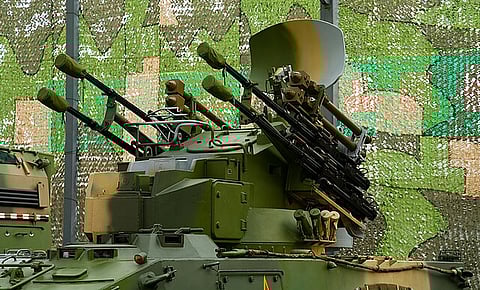
Even if the intelligence were accurate, the weapons in question are purely defensive in nature. MANPADS are man-portable, shoulder-fired anti-aircraft systems designed to protect against low-flying aircraft. They cannot be used to attack civilian populations, to strike across borders, or to threaten shipping lanes. As one source cited by CNN acknowledged, such systems "could be presented as defensive rather than offensive aid". This stands in contrast to the offensive weaponry that the United States and Israel have been deploying against Iranian civilian infrastructure for six weeks. The fact that Washington would object to Iran acquiring defensive systems while simultaneously loading its own warships with "the best weapons ever made" for potential future strikes is quite interesting.
According to the Associated Press, citing three diplomats familiar with behind the scenes efforts, China used its leverage as Iran’s largest oil customer to urge Tehran to return to the negotiating table and accept a ceasefire. A Chinese foreign ministry spokesperson confirmed that Beijing "has worked actively to help bring about an end to the conflict". China’s economic interests are deeply tied to stability in the Gulf. The closure of the Strait of Hormuz, which normally carries approximately one-fifth of the world’s oil is already having a severe impact on Asian economies, including China’s.