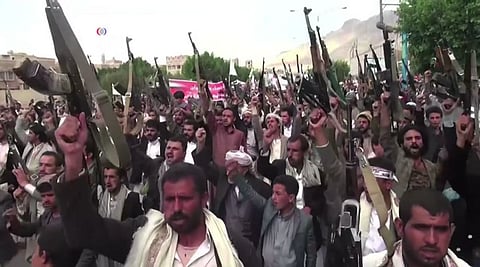


Yemen's Houthi movement has officially entered the expanding Middle East conflict, launching its first ballistic missile attack on Israel since the US-Israeli war on Iran began on February 28. The Houthi military spokesperson, Yahya Saree, announced the group fired a barrage of missiles targeting "sensitive Israeli military sites" in southern occupied Palestine, marking a significant escalation in the five-week-old war. The attack came after the Houthis warned late Friday of possible "direct military intervention" if the conflict continued to widen, with the group declaring its "fingers are on the trigger".
The Houthis framed their attack as an act of solidarity with Iran and the broader "axis of resistance", the network of Iran-aligned groups including Hezbollah in Lebanon and resistance factions in Iraq and Palestine that have long opposed Israeli and American hegemony in the region. Saree stated the operation was conducted "in support of the Islamic Republic of Iran and the resistance fronts in Lebanon, Iraq and Palestine," adding that attacks will continue "until the aggression against all resistance fronts ceases".
The Israeli military acknowledged intercepting a single missile from Yemen, activating air defense sirens across large areas of southern Israel and sending thousands of residents rushing to shelters, though no casualties were reported. However, the Houthis' formal entry into the conflict raises profound concerns about further disruption to global energy markets and international shipping. The group controls Yemen's Red Sea coastline and has previously demonstrated its capacity to attack vessels in the Bab al-Mandab Strait, a critical chokepoint for maritime trade linking the Indian Ocean to the Suez Canal. With Iran having effectively closed the Strait of Hormuz since the war began, through which approximately one-fifth of the world's oil passes, the opening of another front could severely constrict global energy supplies and drive prices even higher.
The expanding conflict has exacted a devastating toll across the region. The Lebanese Health Ministry reports at least 1,189 people killed in Lebanon since March 2, including paramedics and healthcare workers targeted in Israeli strikes. On Saturday alone, Israeli airstrikes killed three journalists in southern Lebanon, including Al-Manar correspondent Ali Shuaib, Al-Mayadeen reporter Fatima Fatouni, and her brother, a cameraman, prompting Lebanese President Joseph Aoun to condemn the attack as a "blatant crime" against press freedom. The Israeli military claimed Shuaib was a Hezbollah member, a common Israeli tactic to justify targeting journalists, though human rights groups note that even affiliation with a resistance group does not make someone a legitimate military target under international law unless actively participating in hostilities. Meanwhile, US and Israeli strikes on Iran have killed over 1,340 people, including former Supreme Leader Ali Khamenei, with Iranian retaliatory attacks wounding 12 US personnel at a Saudi air base and causing damage across the Gulf region.
Despite US President Donald Trump's claims that "very strong talks" are underway with Iran to find a diplomatic offramp, Tehran has denied any direct negotiations with Washington, and fighting has continued unabated. Secretary of State Marco Rubio insisted Friday that US military operations would conclude "within weeks, not months," though the entry of the Houthis into the conflict suggests the opposite trajectory. Pakistani officials are set to host the foreign ministers of Saudi Arabia, Turkey and Egypt in Islamabad for talks aimed at de-escalation, with Prime Minister Shehbaz Sharif speaking directly with Iranian President Masoud Pezeshkian to condemn "continued Israeli attacks on Iran, including recent strikes on civilian infrastructure". As the war enters its fifth week with no end in sight, the opening of a new front by the Houthis signals that Israel and the United States may have badly miscalculated the reach of the forces arrayed against them.