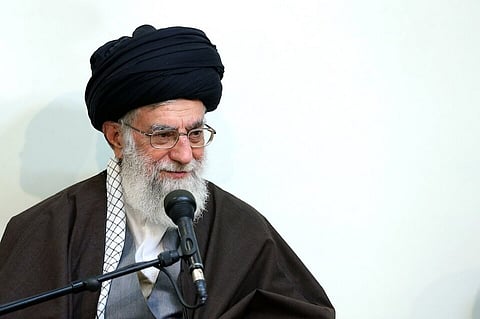


The Islamic Republic of Iran is entering one of the most sensitive and potentially volatile periods since the outbreak of the war on February 28. As the nation prepares for the state funeral of its slain Supreme Leader, Ayatollah Ali Khamenei, assassinated on the very first day of the US-Israeli strikes Tehran has issued a series of warnings to its adversaries, while simultaneously engaging in delicate, indirect negotiations with Washington in Doha.
The coming days will test whether Iran can navigate this treacherous path without succumbing to the very escalation it seeks to avoid.
A Nation on Edge
The funeral processions for Ayatollah Ali Khamenei are set to commence on July 4 in Tehran and will conclude on July 9 with his burial in his hometown of Mashhad, with additional ceremonies planned in Qom and Iraq in between. The event is not merely a religious observance but a major state occasion, and Iranian authorities are taking no chances. Heightened security measures have been implemented across the country, with temporary airspace restrictions imposed over several cities, including Tehran and Mashhad. Crowd control will be a top priority, with helicopters potentially deployed to help coordinate the massive gatherings and ensure the safe transport of the coffin.
Against this backdrop, Iran’s military leadership has delivered a blunt warning to both the United States and Israel. Ali Abdollahi, commander of the Khatam al-Anbiya Central Headquarters, the operational nerve centre of Iran’s armed forces stated on Thursday that any attack on Iran during this period would be met with “harsh retaliation”. This warning was not issued in a vacuum. It came just days after Israeli Defence Minister Israel Katz declared that Iran's current Supreme Leader, Mojtaba Khamenei, was “marked for death,” a statement Tehran has branded as “state terrorism”. Iran’s ambassador to the UN, Amir-Saeid Iravani, has formally protested to Secretary General Antonio Guterres and the Security Council, tying the threat to a “deliberate and systematic policy of state terrorism” targeting Iranian officials.
Progress Amidst Contradictions
While the military brass issues warnings, Iranian diplomats have been engaged in a parallel track of indirect negotiations with the United States in Doha, Qatar. The talks, which concluded on Wednesday, were focused on two critical issues: the management of the Strait of Hormuz and the release of frozen Iranian assets. According to mediators, the discussions registered “positive progress” on implementing the June 17 memorandum of understanding that halted the war. A communication channel will be established between Iran and the US to report and discuss breaches of the interim deal.
However, the diplomatic progress is fragile and riddled with contradictions. Iran has stated publicly that its priorities include agreeing on the management of the strait and the release of $6 billion in frozen assets. Yet, the US has offered to unfreeze Iranian assets in exchange for Tehran dropping plans to impose fees on ships passing through the strait, a proposal that cuts to the heart of Iran’s insistence on sovereign control over the waterway. Meanwhile, Iranian President Masoud Pezeshkian has defended the negotiations, revealing that the decision to engage was not taken lightly. He stated that the Supreme Leader had mandated that if three quarters of the Supreme National Security Council voted in favour, the diplomatic track should proceed, and 12 out of 13 members did so. Pezeshkian has made it clear that had the Leader ordered otherwise, no talks would have taken place. This is a pointed reminder that the negotiations enjoy the highest level of political and theological approval, even as hardliners within the IRGC and other factions express unease.
The Nuclear Conundrum
Perhaps the most significant point of contention remains Iran's nuclear programme. Parliament Speaker Mohammad Bagher Ghalibaf has categorically denied reports that Iran has granted the International Atomic Energy Agency (IAEA) access to its bombed nuclear sites at Fordow, Natanz and Isfahan. He stated that “IAEA inspectors do not have the right to inspect nuclear sites bombed by the US” and that inspectors currently only have access to the Bushehr power plant and the Tehran reactor.
This directly contradicts earlier suggestions by US officials that Iran had agreed to allow inspectors back in. The parliamentary law prohibiting such access, coupled with a corresponding resolution from the Supreme National Security Council, shows the depth of Iranian distrust. The nuclear issue has been effectively deferred, with the US focusing on the immediate priorities of the strait and frozen assets, while Iran insists that the bombed sites are off limits.
The Strait of Hormuz
Iran's military command has been unequivocal in its assertion that the Strait of Hormuz falls under Iranian sovereignty and that any US interference will be met with a “decisive and swift” response. The Khatam al-Anbiya Central Headquarters has declared that the strait is not “the playground of aggressor America” and that its security is a red line. All oil tankers and commercial vessels seeking to pass through must use routes designated by Iran, and any deviation will be met with an “immediate and forceful response”. This stance has been reinforced by Deputy Foreign Minister Kazem Gharibabadi, who dismissed a US-led regional security dialogue held in Bahrain, stating that “Hormuz is defined under Iran’s command, not CENTCOM”.
He argued that regional security will not be ensured under the US military umbrella, but through the end of interventions and the withdrawal of American forces. In essence, Iran is signalling that while it is willing to talk, it will not cede control over the strategic waterway that it views as its sovereign right.
The next few days will be critical. The funeral processions for Ayatollah Khamenei represent a moment of profound national unity, but also a period of heightened vulnerability. Iran has warned its enemies not to attack, and the presence of US and Israeli military assets in the region adds a volatile element to an already tense situation. The Doha talks have produced a communication channel and some progress, but the fundamental issues, control of the Strait of Hormuz, the release of frozen assets, and the future of Iran’s nuclear programme remain unresolved. The next round of talks is scheduled to take place after the funeral processions, but until then, the region holds its breath.