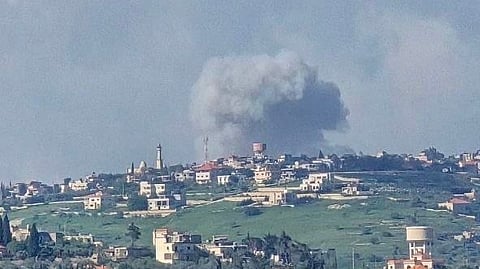


A fragile ceasefire between Israel and Lebanon is facing mounting strain as military actions, political divisions, and competing narratives raise questions about its durability and broader implications.
The 10-day truce, brokered by the United States and in effect since April 16, has coincided with continued Israeli military activity in southern Lebanon and ongoing hostilities involving Hezbollah.
At the same time, analysts and officials point to diverging positions within Israel over the future of the contested region.
The Israeli military has warned residents in southern Lebanon against returning to dozens of villages near the border and areas close to the Litani River, citing continued troop deployments.
Despite the ceasefire, Israeli forces carried out an overnight strike in Kfarkela, targeting what they described as a ready-to-fire launcher.
In parallel, Hezbollah reported attacks on Israeli forces, claiming explosions struck a convoy of armoured vehicles and destroyed four Merkava tanks in coordinated blasts.
There has been no immediate confirmation from Israel regarding the reported incident.
Differing narratives within Israel are shaping the trajectory of the ceasefire and future policy decisions.
According to political commentator Abed Abou Shhadeh, one position, represented by the Israeli military, suggests operational goals in southern Lebanon have been achieved and supports negotiations with the Lebanese government.
Another perspective, associated with Israel’s settler movement, opposes diplomatic engagement and advocates maintaining control south of the Litani River for potential settlement.
These internal debates are unfolding as Israel monitors a separate ceasefire dynamic involving Iran and the United States.
Meanwhile, developments in Lebanon intersect with broader regional tensions, as Israeli actions in the occupied West Bank continue, where more than 1,151 Palestinians have been killed and thousands detained since October 2023.
The evolving situation underscores the uncertainty surrounding the ceasefire and the potential for further escalation across multiple fronts.