

Israel’s military announced it has established a so-called “yellow line” in southern Lebanon, marking the first time such a boundary has been declared there following a recently implemented 10-day ceasefire.
The measure, described as a buffer zone south of the Litani River, resembles a similar division imposed in the Gaza Strip after the war that began in October 2023.
The military said its forces identified individuals approaching from north of the line who it claimed posed an immediate threat, prompting strikes by both air and ground units.
It added that such actions were conducted in self-defense and are not restricted by the ceasefire terms.
The “yellow line” has been presented by Israel as a security demarcation, separating areas of military control from surrounding regions.
In Gaza, a comparable line has divided the territory into zones with varying restrictions, with Israeli forces routinely engaging individuals who approach it.
The introduction of a similar concept in Lebanon has raised concerns about the extension of that operational model into a new theater.
Israeli Defense Minister Israel Katz has indicated that the military intends to maintain control over areas occupied during the recent offensive.
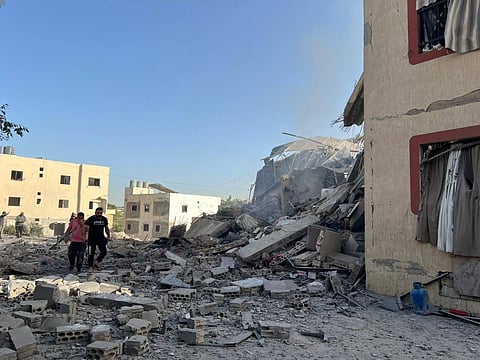
Reports from the region also indicate continued demolition of homes in southern Lebanese villages near the border.
Despite the ceasefire that began Thursday, Israeli artillery strikes were reported in towns including Beit Leif, Qantara, and Touline.
The military said these operations were in response to perceived threats near positions where its troops remain stationed.
Hezbollah Secretary-General Naim Qassem stated that the truce cannot persist unless both sides adhere fully to its terms.
“There is no ceasefire from the side of the resistance only; it must be from both sides.”
He also called for a complete Israeli withdrawal and outlined priorities including prisoner releases and reconstruction efforts.
Lebanese President Joseph Aoun has expressed readiness to take steps aimed at securing Israel’s withdrawal.
The United States has indicated it is working to prevent further escalation as the ceasefire remains fragile.
Since early March, Israeli attacks in Lebanon have resulted in more than 2,200 deaths and thousands of injuries, according to Lebanese health authorities.