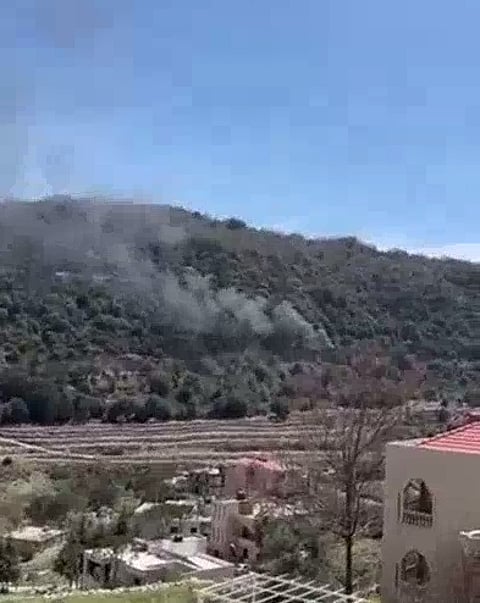


An Israeli airstrike in southern Lebanon killed three journalists on Saturday, March 28, marking another deadly attack on media professionals amid the escalating US-Israeli war against Iran and its regional allies. The strike targeted a vehicle on the Al-Barad road near the city of Jezzine, killing all four occupants, three of whom were journalists. The victims were identified as Ali Shuaib, a correspondent for Al-Manar TV; Fatima Fatouni, a reporter for Al-Mayadeen; and her brother, cameraman Mohammad Fatouni. Lebanese President Joseph Aoun condemned the attack as a "blatant crime" that violates international laws protecting journalists in conflict zones.
The Israeli military confirmed it killed Ali Shuaib, alleging without providing evidence that he was a "terrorist in the intelligence unit of Hezbollah's Radwan Force" who "operated for years under the guise of a journalist". The military did not comment on the deaths of Fatima and Mohammad Fatouni. This pattern of labeling journalists as "terrorists" posthumously has been documented repeatedly throughout the conflict. Lebanese authorities rejected the Israeli justification, with Information Minister Paul Morcos stating such actions "are classified as war crimes". Prime Minister Nawaf Salam called the targeting "a flagrant violation of international humanitarian law" and a clear breach of rules guaranteeing protection for journalists in wartime.
Saturday's killings represent the second such attack on journalists in Lebanon this month. On March 18, Al-Manar presenter Mohammad Sherri and his wife were killed in an Israeli strike on Beirut while sleeping in their home. The targeting extends beyond journalists to paramedics and healthcare workers. On the same day as the journalist killings, Israeli strikes killed nine paramedics in southern Lebanon, including four from Hezbollah's Islamic Health Committee and five from the Hezbollah-allied Amal movement's Risala Scouts. The Lebanese Health Ministry has documented the deaths of 46 paramedics and five healthcare workers since the escalation began.
The Israeli offensive against Lebanon, which began on March 2 after Hezbollah launched rockets in retaliation for the killing of Iran's supreme leader, has resulted in severe civilian casualties. According to Lebanese Health Ministry figures, at least 1,189 people have been killed, including 120 children, and over 3,300 injured since hostilities broke out. On Saturday alone, additional strikes across southern Lebanon killed five Syrian nationals in Hanine, a father and son in Rmeish, and one person in Haddatha, while an airstrike on Sarafand wounded 17 people. A Lebanese soldier was also killed in an airstrike on Deir al-Zahrani.
Israel has a documented history of targeting journalists in Lebanon predating the current conflict. During the 2023-2024 hostilities, at least five journalists were killed in Israeli strikes, including a correspondent for Al-Mayadeen and a cameraman for Al-Manar. In October 2023, Reuters journalist Issam Abdallah was killed and six others wounded, including two AFP journalists, in an Israeli tank shelling near the Israeli border. An independent AFP investigation concluded that two Israeli 120mm tank shells were fired from inside Israel at the group of journalists. Media watchdog organizations have documented that Israel has killed more journalists in recent years than any other nation, with impunity.
Under the Geneva Conventions and UN Security Council Resolution 1738, journalists are considered civilians protected from targeting unless they are directly participating in hostilities. Lebanese President Joseph Aoun has called on international bodies to intervene to stop attacks on Lebanese territory and to hold Israel accountable for what he termed a "violation of the most basic rules of international law". The targeting of clearly identified journalists engaged in their professional duties has drawn condemnation from media freedom organizations worldwide, who warn that such attacks create a climate of impunity that endangers press freedom across the region.
In response to the escalating Israeli attacks, Hezbollah has launched multiple operations against Israeli military positions. The group announced it ambushed an Israeli force near Baydar al-Faqaani in Taybeh, inflicting heavy casualties, and has targeted troop gatherings in Debel and other areas with rockets and artillery. Witnesses reported seeing wounded Israeli soldiers evacuated from the area. Israeli forces continue to push into southern Lebanon, with officials announcing plans to establish a buffer zone up to the Litani River, approximately 30 kilometers north of the Israeli border.
Saturday's attacks are part of a broader escalation that began after a November 2024 ceasefire between Israel and Hezbollah collapsed. Under the ceasefire agreement, both sides were meant to withdraw from positions in southern Lebanon, but Israel maintained several military posts and continued regular attacks it claimed targeted Hezbollah. After the killing of Iran's supreme leader in February, Hezbollah fired rockets into northern Israel, prompting Israel to dramatically escalate its military operations across Lebanon. The ongoing US-Israeli war against Iran, now in its fourth week, has expanded the conflict to multiple fronts across the region, with Lebanon bearing a heavy toll in civilian lives and infrastructure.