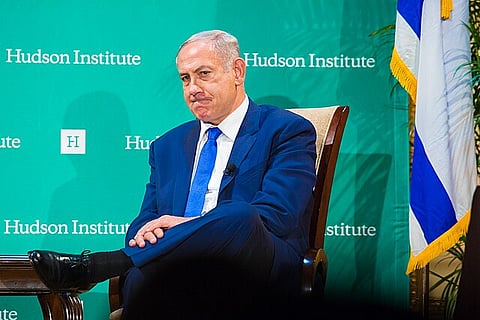


Israeli Prime Minister Benjamin Netanyahu has ordered a further expansion of military operations in southern Lebanon, announcing on March 29 that he instructed the military to widen the existing "security zone" to counter continued rocket fire from Hezbollah. Speaking from the Israeli Northern Command, Netanyahu stated the expansion aims to "finally thwart the threat of invasion and to push the anti-tank missile fire away from our border". The announcement follows Defence Minister Israel Katz's declaration that Israeli forces would establish a permanent buffer zone extending up to the Litani River, approximately 30 kilometers north of the Israeli border, and would maintain "security control" over this area even after hostilities with Hezbollah conclude.
Lebanese officials have reacted with alarm and condemnation to Israel's declared intentions. Defence Minister Michel Menassa denounced the plan as a "new occupation" of Lebanese territory, characterizing it as a deepening of aggression against Lebanese land and national sovereignty. President Joseph Aoun warned that the Israeli plans constitute "collective punishment against civilians" and could be part of "suspicious schemes" to expand Israel's presence in Lebanese territory. The Lebanese government is preparing to submit a formal complaint to the United Nations Security Council regarding what it describes as Israeli violations of international law, particularly the targeting of civilians, journalists, and civilian infrastructure.
The human cost of the expanded Israeli campaign has been devastating. According to the Lebanese Ministry of Public Health, more than 1,268 people have been killed since hostilities reignited on March 2, including at least 124 children and 86 women, with over 3,400 wounded. The Norwegian Refugee Council estimates that at least 300,000 people have already been displaced, a figure that could exceed one million as Israeli evacuation orders continue. Israeli forces have reportedly destroyed five key bridges over the Litani River, effectively severing southern Lebanon from the north and fueling fears of long-term territorial annexation. Defence Minister Katz has explicitly compared current operations to the "Rafah and Beit Hanoun model" in Gaza, signaling a policy of total demolition for border infrastructure and the prohibition of residents' return.
Hezbollah has continued to resist the Israeli incursion, reportedly carrying out approximately 1,100 operations since March 2, including close-quarters engagements with Israeli ground forces. Sources familiar with Hezbollah's internal figures indicate more than 400 of its fighters have been killed since clashes began. On the Israeli side, at least nine soldiers and two civilians have been killed by Hezbollah attacks, with over 100 wounded. Israel claims to have eliminated "thousands" of Hezbollah fighters and significantly degraded the group's missile arsenal, though Netanyahu acknowledged that "Hezbollah still has a residual capability to launch rockets at us".
The United Nations has issued warnings regarding Israel's expanding operations. UN Humanitarian Chief Tom Fletcher, addressing an emergency Security Council session, questioned how the international community would prepare for "a new addition to the list of occupied territories," noting the trajectory described by Israeli ministers. Three Indonesian peacekeepers serving with UNIFIL have been killed in southern Lebanon in recent days, with the UN Secretary-General emphasizing that attacks on peacekeepers violate international law "and may amount to war crimes". The UN has also recorded the killing of at least 52 health workers and three journalists since the escalation began.
As the conflict continues, several European nations have restricted their support for US-Israeli military operations. France has refused overflight rights for military supplies destined for Israel, while Italy denied landing permission for US military aircraft at its Sigonella Air Base. Spain has closed its airspace to US planes involved in strikes on Iran and has prohibited the use of Spanish military bases for war-related activities, with Defence Minister Margarita Robles stating the position had been clearly communicated from the outset.