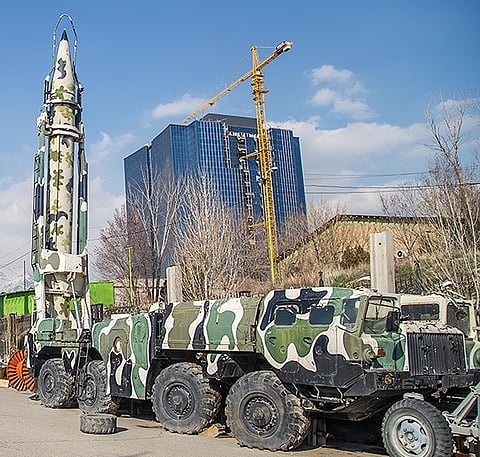


The Israeli military has determined that Iran has resumed large-scale missile production, restoring its capabilities to levels seen prior to the 12-day conflict in June. A senior Israeli military official told the Knesset Foreign Affairs and Defense Committee on Monday that Iran has returned to “mass production” of ballistic missiles. According to the briefing, any future confrontation could see Iran fire between 500 and 1,000 missiles in a single wave aimed at overwhelming Israeli air defenses.
An intelligence assessment recently shared with Israeli lawmakers stated that Iran is projected to produce approximately 6,000 missiles in 2026 and more than 10,000 by 2028. The report was based on satellite analysis, which Israeli intelligence claims shows rapid repairs and expansion of Iran’s missile manufacturing infrastructure.
Iran has openly signaled its own advances. Defense Minister Aziz Nasirzadeh said earlier this month that current stockpiles “far surpassed” pre-war levels, adding that missile factories are operating around the clock and increasing both production volume and technological sophistication.
During the June conflict, Iran launched an estimated 500 to 600 missiles in 43 separate waves following Israel’s initial attack early on June 13. Israel’s operation reportedly targeted Iranian leadership and command facilities, prompting the retaliatory missile campaign. While Iran’s exact missile inventory before the war remains unclear, estimates placed annual production at more than 3,000 missiles, with a stockpile of over 20,000.
Satellite imagery taken in recent weeks has shown construction work around above-ground entrances at underground missile complexes. Analysts believe the work aims to expand tunnel systems after several entrances in western Iran were struck during the war, rendering some bases inoperable by trapping crews and preventing missile launches.
Despite a tense ceasefire that has held for nearly six months, Iranian leadership is said to remain convinced that another confrontation is likely. The country’s military has maintained its highest readiness level. In recent weeks, observers have noted increased patrol activity by the Iranian Air Force as well as the relocation of air defense assets to northern regions near Azerbaijan, where Israel is believed to have launched some attacks in June.