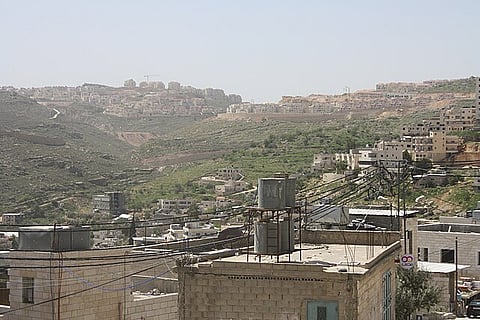


While the world’s attention has been fixed on the fragile ceasefire between the United States and Iran, Israel’s security cabinet has been quietly working to reshape the map of the occupied West Bank. In a decision taken on April 1 and kept under wraps for more than a week, the Israeli government secretly approved the establishment of 34 new settlements in Palestinian territory. The decision was finally made public on Thursday after the military censor granted permission for publication, revealing what Peace Now has described as the largest single approval of settlements in Israel’s history. Coming on top of 68 other settlements already approved since Prime Minister Benjamin Netanyahu’s far‑right coalition came to power in 2022, this latest move brings the total number of new settlements approved by the current government to 103, a staggering figure that reflects an unprecedented acceleration of Israel’s decades‑long colonisation project.
The timing of the decision is anything but coincidental. Channel 24, which first broke the story, explicitly noted that the approval was passed “during the US‑Israeli military campaign against Iran that began February 28,” a period when global attention was overwhelmingly focused on the Gulf and the closing of the Strait of Hormuz. The cabinet deliberately chose to keep the decision secret to avoid US pressure, as President Donald Trump has publicly opposed Israeli annexation of the West Bank. With Washington preoccupied by its own war and subsequent ceasefire negotiations, Netanyahu’s government appears to have calculated that it could push through its most ambitious settlement expansion yet without facing meaningful international consequences. Hamas, in its response to the news, described the move as “a blatant exploitation of the regional situation and international distraction” and a further confirmation of “the occupation’s schemes and crimes aimed at the Judaization of Palestinian geography”.
The secrecy surrounding the decision also appears designed to conceal internal dissent. According to Ynet, the military’s chief of staff, Lieutenant General Eyal Zamir, attended the security cabinet meeting on April 1 and warned that the army could “collapse” because of increasing demands on its manpower. The legalisation of dozens of outposts would grant them official settlement status and therefore entitle them to protection from Israeli troops, stretching an already overburdened military even further. Zamir reportedly raised concerns about limited manpower and requested an assessment of implementing the decision across multiple areas simultaneously. Yet his warnings were effectively ignored. The cabinet proceeded with the approval, prioritising the ideological goals of the settler movement over the operational realities facing Israel’s armed forces. Critics have pointed to a stark contrast in priorities: while northern Israeli communities have been under fire from Hezbollah and the military has been stretched thin by the war in Iran, the government chose to divert resources toward establishing new colonies deep inside the West Bank.
Of the 34 newly approved settlements, 10 are existing outposts that were previously considered illegal even under Israeli domestic law but will now be retroactively legalised. The remaining 24 are yet to be built, but their planned locations are deeply troubling. According to i24News, the approved sites include areas in the far north of the West Bank “that even the Israeli army rarely reaches”, as well as locations deep inside Palestinian neighbourhoods and in remote areas where the military has little presence. This pattern of settlement expansion, rights monitor Yesh Din has warned, is aimed at advancing the Israeli far‑right’s ambitions of depopulating the territory of Palestinians, pushing them into small, densely populated enclaves while Israel seizes the rest. Palestinian official Muayyad Shaaban has called the approval “an extremely dangerous leap,” noting that preliminary maps reveal “a systematic and widespread targeting of Palestinian lands”.
All of these settlements are unequivocally illegal under international law. The Fourth Geneva Convention explicitly prohibits an occupying power from transferring parts of its own civilian population into the territory it occupies. In July 2024, the International Court of Justice issued a landmark opinion declaring Israel’s occupation of Palestinian territory illegal and calling for the evacuation of all settlements in the West Bank and East Jerusalem. Yet Netanyahu’s government has continued to flout these rulings with impunity. The defence ministry, which is in charge of settlement activities, declined even to respond to requests for comment, with a spokesperson telling AFP simply: “We are not addressing this issue”. This wall of silence, combined with the initial secrecy of the decision, suggests a government that knows it is acting unlawfully but believes it can get away with it while the world looks elsewhere. Meanwhile, settler violence against Palestinians has surged in tandem with the expansion. According to UN data, almost 1,700 Palestinians were displaced by settler attacks in the first three months of 2026 alone, surpassing the total number for all of 2025.