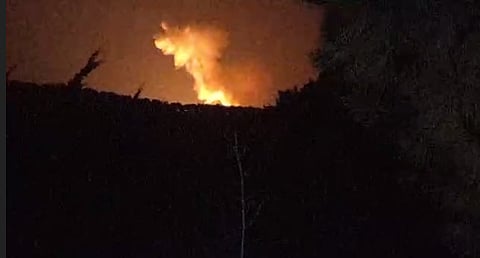


Israeli military forces launched a new wave of aerial attacks across southern Lebanon on January 25, 2026, killing at least two people and continuing a pattern of near-daily violations of the ceasefire that has been in place since November 2024. Strikes targeted the village of Bouslaiya, the area of Aita al-Shaab, and extended into the eastern Bekaa Valley. Lebanese authorities reported that one person was killed and another injured in a strike on a warehouse in the Khirbet Selm area, while a separate attack in Derdghaya, east of Tyre, claimed another life. The Israeli military claimed these operations targeted Hezbollah infrastructure, including what it described as a "weapons manufacturing site" and positions of operatives, though it provided no evidence for these assertions.
This latest aggression underscores the sustained pressure on Lebanese sovereignty and the fragility of the U.S.- and French-brokered truce. The United Nations Interim Force in Lebanon (UNIFIL) has documented over 10,000 ceasefire violations by Israel since the agreement took effect. Furthermore, the Israeli military continues to occupy five separate points inside Lebanese territory, blocking the reconstruction of levelled border villages and preventing displaced residents from returning to their homes. These actions are seen as part of a broader campaign to destabilize Lebanon and undermine its national authority.
The use of overwhelming force against Lebanese targets is not a new tactic. In a defining operation on September 27, 2024, the Israeli Air Force assassinated Hezbollah Secretary-General Hassan Nasrallah in Beirut. That strike involved an unprecedented barrage of U.S.-made GBU-31 bunker-buster bombs, with between 60 and 80 of the 2,000-pound penetrator munitions dropped on a single city block to destroy a deep underground command center. Military analysts noted the strike's "notably different approach to collateral damage" compared to typical U.S. rules of engagement, employing a scale of firepower that far exceeded what was used in major American campaigns in Iraq.
Hezbollah, born from resistance to the Israeli occupation of southern Lebanon that lasted until 2000, maintains that its defensive military capacity remains essential as long as Israel continues its attacks and occupies Lebanese land. The group's current leadership argues that the Muslim world is facing a major confrontation led by the United States and its Western allies in support of Israel. Despite being significantly weakened by the 2024 war, which killed much of its senior leadership and displaced over 1.2 million Lebanese, Hezbollah has stated it will not discuss further disarmament while Israeli assaults persist.