

In the wake of Israel’s largest wave of airstrikes since the war began on 2 March, Lebanon’s already fragile health system is now at imminent risk of collapse. The World Health Organisation has warned that some hospitals could run out of life‑saving trauma kits within days, as a single day of mass casualties consumed roughly three weeks’ worth of critical supplies. Dr Abdinasir Abubakar, the WHO’s representative in Lebanon, told Reuters: “Some of the trauma management supplies were in short supply and we may run out in a few days.” He added that if another mass casualty event occurs, “it will be a disaster. Probably we will lose more lives just because we don’t have enough supplies.” The trauma kits contain essential items such as bandages, antibiotics and anaesthetics, all of which are vital for treating war‑related injuries. Their near depletion is a direct consequence of the relentless and disproportionate Israeli bombing campaign that has targeted densely populated residential areas across the country.
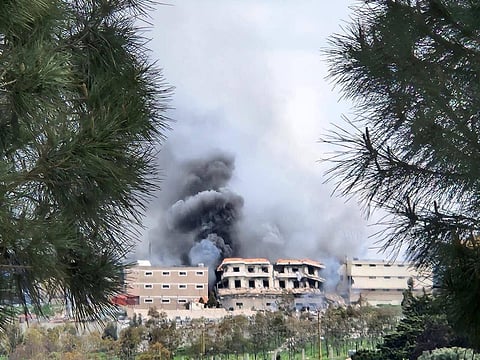
On Wednesday, Israel launched its most ferocious attack on Lebanon to date. In a synchronised bombing spree that lasted barely ten minutes, Israeli warplanes dropped more than 100 bombs on multiple neighbourhoods of Beirut, the Bekaa Valley and southern Lebanon. The Lebanese Civil Defence reported at least 254 people killed and over 1,100 wounded, with the death toll expected to rise as rescue teams continue to search through the rubble. The attack was described by local media as a “massacre” and by President Joseph Aoun as “barbaric”. Israel claimed it had struck 100 Hezbollah “command centres and military sites”, but provided no evidence to support that assertion, and eyewitness accounts confirm that the targets were almost exclusively residential buildings. Among the hardest hit was the commercial district of Corniche Al Mazraa, where a residential building and a warehouse were destroyed, causing panic and forcing families to flee. Rescue workers reported pulling bodies from the debris for hours, and many remain unidentified.
The latest strikes are not an isolated incident but part of a wider Israeli strategy to systematically degrade Lebanon’s healthcare infrastructure. According to Lebanon’s Ministry of Public Health, Israeli attacks have so far killed 53 medical workers, destroyed 87 ambulances or medical centres, and forced the closure of five hospitals since 2 March. The WHO has verified 92 attacks on health facilities, vehicles and personnel since 28 February, resulting in 53 deaths and 137 injuries. In one particularly egregious incident on 30 March, a strike landed just 100 metres from Rafik Hariri University Hospital, Lebanon’s largest public medical facility, killing four people and injuring 39 others in a nearby residential area. The WHO’s Director‑General, Tedros Adhanom Ghebreyesus, has repeatedly voiced deep concern over the escalating attacks, stressing that “these acts cannot become the new norm”. However, the pattern is clear: by targeting health workers, ambulances and hospitals, Israel is not only inflicting immediate casualties but also ensuring that the health system will be unable to cope with the ongoing emergency, thereby multiplying the long‑term human toll.
The health crisis is being exacerbated by a massive wave of displacement. More than 1.2 million people, nearly one in five of Lebanon’s population have been forced from their homes, most of them from Shia Muslim communities in the south, the eastern Bekaa Valley and the southern suburbs of Beirut, areas where Hezbollah holds sway. Displaced families are now sheltering in overcrowded schools, public spaces and even cars, creating ideal conditions for the spread of disease and putting further strain on what remains of the health system. At the same time, the war in the Gulf and the closure of the Strait of Hormuz have disrupted supply chains, causing the cost of shipping medical supplies to Lebanon to triple. Medicines for chronic diseases, such as insulin for diabetes patients, could also run out within weeks. In response, the WHO and the Lebanese Ministry of Health are planning to redistribute supplies between hospitals to avoid total depletion, but they acknowledge that the system is being stretched beyond its limits. Meanwhile, Hezbollah has not claimed any attacks since the US‑Iran ceasefire was announced, but the group has warned displaced families not to try to return home until a formal ceasefire is in place. Observers have expressed surprise at Hezbollah’s resilience, noting that its military capabilities have proved far stronger than widely expected, and that Israeli forces have acknowledged they will not be able to disarm the group by force.