

Jordan carried out air strikes in southern Syria on Monday in retaliation for a deadly church attack last week, killing at least seven people, including three children, according to Syrian authorities.
The strikes targeted locations in Deraa and Suweyda provinces, prompting Syria to close its main border crossing with Jordan amid conflicting accounts over whether the military operation had been coordinated.
Jordan's military said its aircraft targeted armed group hideouts in southeastern Syria following Friday's shooting at a Greek Orthodox church in Karak, where nine people were killed and 34 wounded.
It claimed the operation killed and wounded several militants and destroyed vehicles.
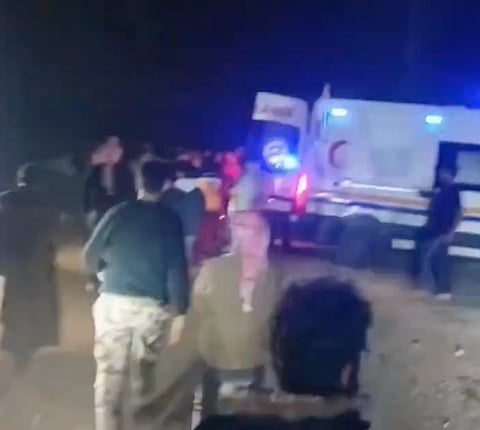
Syrian Civil Defence reported strikes on four locations, recovering seven bodies, including three men, a woman and three children.
Five victims belonged to one family whose tent was struck in Al-Tai village in Deraa, while three relatives were wounded.
Separate strikes killed an 80-year-old man in Al Shayyah and a 60-year-old man in Shahba, Suweyda.
Another strike damaged a residential building in Muzayrib without reported casualties.
Jordan maintained that the operation was coordinated with Damascus, but Syrian authorities denied receiving advance notification or participating in its planning.
Syria announced an investigation and opened direct communication channels with Jordanian officials.
Following the bombardment, Syrian authorities suspended passenger and commercial traffic in both directions through the Nassib crossing, the only border passage handling such movement between the countries.
Earlier Monday, Jordanian security forces arrested two brothers and their brother-in-law suspected of involvement in the church shooting.
Officials said the suspects were discovered hiding in a building near Karak and were seriously injured during an armed confrontation lasting approximately three hours.
Jordanian Interior Minister Mazen al-Faraya identified the attackers as Jordanian nationals.
The arrests and cross-border strikes followed King Abdullah II's pledge to impose severe penalties on those responsible for the church attack and review national security procedures.
The dispute over the air strikes has added diplomatic tensions to the aftermath of the deadly shooting.