

The Kremlin said Wednesday that neither Russia nor China has carried out secret nuclear tests, responding to U.S. allegations that Beijing conducted an underground nuclear explosion in 2020 and renewed calls from Washington for a broader arms control agreement.
Earlier this month, the United States accused China of conducting a covert nuclear test in June 2020 at its Lop Nor test site in western China.
Assistant Secretary of State Christopher Yeaw said a remote seismic station in Kazakhstan detected an “explosion” of magnitude 2.75 located roughly 450 miles away from the site on June 22, 2020.
“I’ve looked at additional data since then. There is very little possibility I would say that it is anything but an explosion, a singular explosion,” Yeaw said, adding the data were not consistent with mining activity or an earthquake.
He described the event as what would be expected from a nuclear explosive test.
The Comprehensive Test Ban Treaty Organization said there was insufficient data to confirm the allegation with confidence.
The organization’s monitoring system recorded two very small seismic events 12 seconds apart that day, according to its executive secretary.
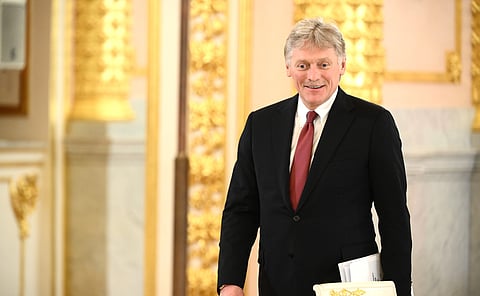
Kremlin spokesman Dmitry Peskov rejected the accusations, saying neither Moscow nor Beijing had conducted nuclear tests.
“Neither the Russian Federation nor China has conducted any nuclear tests,” Peskov said, noting that Chinese officials had categorically denied the U.S. claims.
China’s Foreign Ministry also dismissed the allegation, saying the United States had no factual basis for the accusation.
The dispute comes as U.S. President Donald Trump presses China to join the United States and Russia in negotiating a replacement for New START, the last U.S.-Russian nuclear arms control treaty, which expired on February 5.
The expiration of the agreement has fueled debate among arms control experts, with some warning of a potential acceleration in nuclear competition while others downplay such concerns.