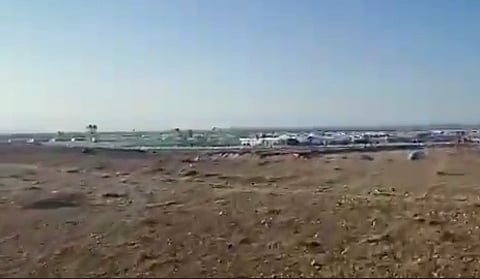


A significant prison break in northeastern Syria has escalated tensions during a fragile transfer of power, with conflicting reports emerging about the number of escaped Islamic State (IS) detainees and responsibility for the incident. Syria's Interior Ministry confirmed that approximately 120 detainees escaped from the Shaddadi prison, which had been under the control of the Kurdish-led Syrian Democratic Forces (SDF). Following the breakout, Syrian army units and special forces entered the town, recapturing 81 escapees while continuing operations to apprehend the remaining fugitives. However, Kurdish media reported a spokesperson for the SDF claimed the number of escaped prisoners was around 1,500, painting a picture of a much larger security breach.
The incident has led to a sharp exchange of blame between the Syrian government and the SDF. Syrian authorities have accused the Kurdish-led forces of deliberately releasing the prisoners. In contrast, the SDF has released statements and video footage alleging that the prison, housing thousands of IS members, came under repeated attack by "Damascus-affiliated factions," leading to a loss of control. The SDF further claimed that several of its guards were beheaded during the assault and that the U.S.-led international coalition, despite having a nearby base, did not respond to appeals for assistance.
This prison break occurred against the backdrop of a recent Syrian government offensive and a tentative ceasefire agreement. After days of fighting, the SDF agreed on Sunday to withdraw from the strategic, oil-rich provinces of Raqqa and Deir al-Zor. A key part of the announced ceasefire deal was the transfer of administration for camps and prisons holding IS members to the Syrian government. However, clashes have continued around detention sites, including reports of fighting near the al-Aqtan prison in Raqqa, where SDF-aligned forces have refused to relinquish control. The SDF has accused government factions of cutting off water to that prison, calling it a violation of humanitarian standards.
The volatile situation has drawn international attention. U.S. President Donald Trump commented on the event, crediting cooperation with the Syrian government for recapturing the escaped prisoners. Meanwhile, human rights groups have pointed to the crisis as evidence of the unsustainable nature of indefinitely detaining thousands of people, including foreign nationals, in camps like al-Hawl without trial. The prison break at Shaddadi underscores the severe and ongoing threat posed by the Islamic State. It highlights the potential for major security repercussions as control shifts in northeast Syria, raising urgent questions about who will bear the long-term responsibility for managing detained fighters and preventing a resurgence of the group.