

Hamas has issued a stern warning that Israel's assassination of a senior commander directly threatens the fragile ceasefire in Gaza, as the Palestinian group positions its resistance as an indispensable right against continued occupation. The killing of Raed Saed in an Israeli airstrike on Saturday represents the highest-profile assassination since the U.S.-backed truce began in October and has escalated tensions as critical talks about Gaza's future security unfold.
Hamas chief negotiator and Gaza leader, Khalil al-Hayya, confirmed the killing of Saed, who was described as the second-in-command of the group's armed wing and head of its military manufacturing unit . In a televised address, al-Hayya condemned the attack as part of a pattern of "continued Israeli violations," stating that such assassinations "threaten the viability of the agreement" . He directly called on U.S. President Donald Trump and other mediators, as the "main guarantor" of the deal, to pressure Israel to respect the ceasefire . The strike, which killed four others and wounded at least 25, triggered a large funeral procession in Gaza City, with thousands of supporters chanting and carrying coffins draped in green Hamas flags .
The assassination comes amid advanced international planning for an International Stabilization Force (ISF) authorized by the UN Security Council. The U.S. Central Command is set to host a conference in Doha on December 16 with partner nations to plan the force, and the Trump administration is reportedly planning to appoint an American two-star general to command it. Hamas has drawn a clear line on this issue. Khalil al-Hayya stated that the role of any international force must be strictly "limited to maintaining the ceasefire and separating the two sides on the boundaries of the Gaza Strip," with no mandate to operate inside the territory or intervene in its internal affairs. Senior Hamas officials have rejected outright disarmament by an international force, suggesting they are only open to discussing "freezing or storing" weapons during the truce.
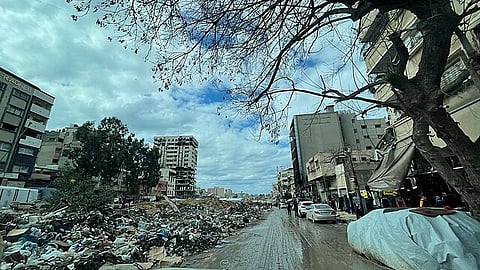
The dispute over the ISF's role highlights the major obstacles to moving to the second phase of the ceasefire agreement. This next phase envisions further Israeli withdrawal, disarmament, and reconstruction under a U.S.-led "Board of Peace". However, Hamas insists that a full Israeli withdrawal and the opening of border crossings for unrestricted aid and reconstruction must precede any discussion of its weapons, which it frames as a legitimate right of resistance. Meanwhile, Israel maintains control over roughly the eastern half of Gaza, with its military chief referring to the current withdrawal line as a "new border" . Since the truce began, Palestinian authorities report that Israeli attacks have killed at least 386 people, showing the fragility of the calm.