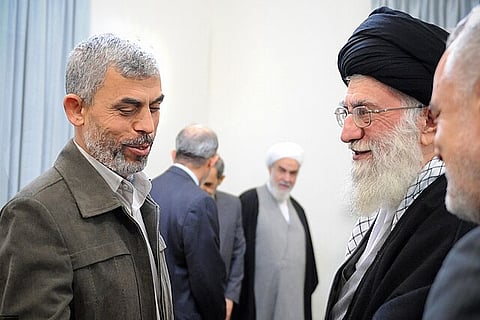


In a decisive moment for the Palestinian resistance, Hamas is poised to elect a new leader this month, demonstrating the movement's resilience and organizational continuity despite an intense campaign of Israeli assassinations. The election, held by the group's secretive 50-member Shoura Council, will fill the role left vacant since Israel killed the influential Gaza leader Yahya Sinwar in 2024. The two frontrunners, both seasoned veterans residing in Qatar, embody the strategic choices facing Hamas as it navigates devastating war, international demands for disarmament, and the future of the Palestinian cause.
Khalil al-Hayya, born in Gaza in 1960, has been a core member of Hamas since its founding in 1987 and is widely regarded as the group's lead negotiator. His political career is deeply intertwined with Hamas's governance and diplomacy; he was elected to the Palestinian Legislative Council in 2006 and has headed reconciliation talks with the rival Fatah party. Al-Hayya is known for his close ties to Iran and has been a key figure in indirect ceasefire negotiations with Israel. His personal life has been marked by profound loss, with multiple family members, including his wife, children, and grandson, killed in Israeli airstrikes over the years. Most recently, his son Humam was killed in an Israeli attack on a Hamas compound in Doha in September 2025. In April 2024, al-Hayya articulated a clear political offer, stating Hamas would agree to a ceasefire, lay down its arms, and transform into a political party if an independent Palestinian state is established on the pre-1967 borders.
His main contender is Khaled Meshaal, a founding member of Hamas's political bureau and its chairman from 1996 to 2017. Born in the West Bank town of Silwad in 1956, Meshaal was forced into exile after the 1967 war and has since led the movement from abroad. He is perhaps best known for surviving a botched Mossad assassination attempt in Amman, Jordan, in 1997, where Israeli agents injected a slow-acting poison into his ear. Meshaal is viewed as a pragmatic diplomat with strong ties to Sunni Arab nations like Qatar and Turkey. During his leadership, Hamas won a surprise majority in the 2006 Palestinian legislative elections. He has stated that while the reality of an Israeli state may be acknowledged, it would not be granted recognition or legitimacy, framing resistance as the only path to Palestinian rights.
The leadership vote comes as Hamas operates under an acting five-member council established after Sinwar's death, which includes both al-Hayya and Meshaal. This election is about more than just personnel; it is a strategic decision for a movement under unprecedented pressure. The United States, through President Trump's so-called "20-Point plan," demands Hamas disarm and accept governance by an externally appointed technocratic committee, terms the group has consistently rejected. Hamas maintains that the question of armed resistance is a matter for all Palestinian factions and that weapons would only be surrendered to a legitimate, fully sovereign Palestinian state.
Analysts suggest the choice between al-Hayya and Meshaal represents a balance between deepening ties with Iran and maintaining crucial relationships with Arab mediators. Both men are united in their defiance of Israeli and American ultimatums and their commitment to the Palestinian right of return.