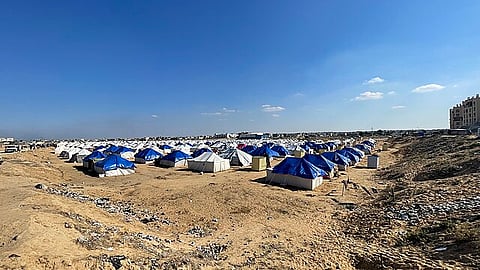


A sweeping Israeli order banning 37 international aid organizations from operating in Gaza took effect on Thursday, drawing immediate and fierce condemnation from the United Nations and other international bodies. The move threatens to sever critical lifelines for hundreds of thousands of Palestinians, with medical groups warning it could close one in three healthcare facilities in the devastated territory.
Israel's Ministry of Diaspora Affairs framed the decision as a necessary security measure, stating that the targeted organizations had failed to comply with new regulations requiring them to submit detailed information on their Palestinian staff to rule out potential links to "terrorism". Officials accused Doctors Without Borders (MSF) of employing two individuals with alleged links to Hamas and Palestinian Islamic Jihad, though they provided no evidence for the claim.
Humanitarian leaders and human rights groups have categorically rejected this rationale. UN High Commissioner for Human Rights Volker Türk called the suspensions "outrageous," stating they represent "the latest in a pattern of unlawful restrictions on humanitarian access" and will make "an already intolerable situation even worse for the people of Gaza". Aid groups argue that sharing sensitive staff data with the Israeli military, which they have been asked to do during the war, could expose their employees to surveillance or targeting, creating an impossible choice.
This ban is not an isolated incident but part of a broader Israeli strategy to restrict and control humanitarian assistance to Gaza. Earlier in 2024, Israel passed a law banning the main UN aid agency, UNRWA, from operating in the territory based on unsubstantiated allegations. Furthermore, a long-standing land, sea, and air blockade, in place since 2007, has been described by human rights organizations as a form of collective punishment that has turned Gaza into an "open-air prison".
International bodies have previously accused Israel of using aid as a political tool. In May 2025, UN agencies rejected an Israeli plan to control relief distribution, warning it would use aid as "bait" to force civilian movement and contravene basic humanitarian principles. This new NGO ban, critics argue, is another pillar in an effort to dismantle the foundations of a functional society in Gaza.
The list of banned organizations includes some of the world's most vital humanitarian responders, such as Doctors Without Borders (MSF), the Norwegian Refugee Council, Oxfam, CARE, and World Vision International. These groups do not merely deliver supplies; they run basic health clinics, malnutrition screening programs, shelter support, and water and sanitation services. Their work is often contracted by larger UN agencies, meaning the ban will cripple the broader relief infrastructure.
The Norwegian Refugee Council stated that at a time when needs far exceed available aid, Israel is "block[ing] life-saving aid from entering". MSF warned that losing access would "deprive hundreds of thousands of people from accessing medical care". With Gaza's health system already decimated and 80% of buildings damaged or destroyed, the removal of these key partners promises catastrophic consequences.
The global response has been one of unified alarm. A coalition of foreign ministers from ten countries, including the UK, France, Canada, and Japan, urged Israel to guarantee NGO access, warning the ban would have a "severe impact on essential services". The European Union stated that the NGO registration law "cannot be implemented in its current form" and that international humanitarian law leaves "no room for doubt: aid must reach those in need".
The ban unfolds amid a fragile ceasefire and a worsening humanitarian crisis where recent storms have destroyed tents, food is prohibitively expensive, and clean water is scarce. As international bodies demand Israel reverse course and uphold its legal obligations as the occupying power, the immediate future for Gaza's 2.2 million residents hangs in the balance, facing the threat of further isolation and suffering.