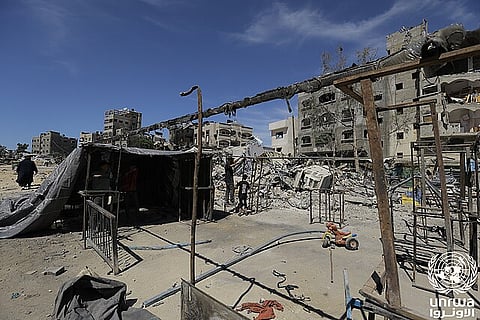


An Israeli drone strike in central Gaza on Wednesday killed three Palestinian journalists who were documenting humanitarian conditions, in an attack local authorities say deliberately targeted a marked civilian vehicle. The victims, identified as Mohammed Salah Qashta, Abdul Raouf Shaat, and Anas Ghneim, were traveling to film a newly established displacement camp in the Netzarim area. Their work was sponsored by the Egyptian Relief Committee, which stated its vehicle, bearing the group's logo, was known to Israeli forces. This latest incident brings the number of Palestinians killed by Israeli forces since a U.S.-brokered ceasefire took effect in October to at least 466.
The killing of these journalists underscores that Gaza remains the most dangerous place in the world for members of the press. According to Reporters Without Borders, Israeli forces have killed nearly 220 journalists in Gaza since the war began in October 2023. Just since December 2024, at least 29 Palestinian journalists have been killed. Media watchdogs and Palestinian syndicates condemn this as a systematic policy to silence witnesses and control the narrative from Gaza, where international journalists face severe Israeli restrictions. Local journalists, therefore, have become the essential eyes and ears for the world.
The Israeli military stated the strike was launched after troops "identified several suspects who operated a drone affiliated with Hamas," claiming it posed a threat. This justification follows a familiar pattern where Israel labels Palestinian journalists as "terrorist" affiliates posthumously. These claims are often viewed with deep skepticism by international observers. The U.S. Ambassador to Israel has previously accused major Western media of parroting Hamas "propaganda," illustrating the intense information war surrounding casualty reports. Critics argue such rhetoric is used to discredit Palestinian sources and obscure the high death toll among civilians and reporters.
Beyond the journalists, the same day saw Israeli forces kill two 13-year-old boys in separate incidents. One boy, Moatsem al-Sharafy, was shot dead while collecting firewood so his mother could cook. These deaths occur against a backdrop of a stalled peace process. While the U.S. has announced a "phase two" of the ceasefire aimed at reconstruction, the reality on the ground is a stark disconnect from diplomatic promises. The continuous violence and loss of life, including those documenting the crisis, signal a fragile truce that is failing to bring safety to Gaza's besieged population.