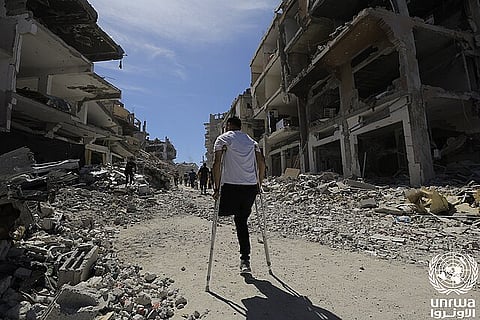


For residents of Gaza enduring a shattered landscape of bombed-out buildings and makeshift camps, official announcements of diplomatic progress offer cold comfort. The formal launch of 'Phase Two' of the US-brokered ceasefire plan has done little to stem the daily violence or alleviate a humanitarian catastrophe of staggering proportions, creating a profound disconnect between high-level diplomacy and the relentless suffering on the ground.
The United States declared the start of Phase Two of the Gaza peace plan, a transition it described as moving "from ceasefire to demilitarisation, technocratic governance, and reconstruction". A key component is the formation of the National Committee for the Administration of Gaza (NCAG), a 15-member body of Palestinian technocrats led by Ali Shaath, a former deputy minister. This committee is tasked with the monumental challenge of restoring basic services and daily governance, operating under the oversight of an international "Board of Peace" chaired by US President Donald Trump. Hamas officials have stated they are "fully prepared to hand over the administration of the Gaza Strip" to this new committee.
However, this diplomatic step is mired in immediate challenges and objections. Israel has publicly objected to the formation of the plan's executive committee, stating it "was not coordinated with Israel and is contrary to its policy". Furthermore, a central demand of Phase Two, the disarmament of Hamas remains a distant prospect, with the group showing no sign it will dismantle its military wing. Hamas has indicated it is ready to discuss the issue of weapons within "internal Palestinian approaches," but this falls far short of the full demilitarization demanded by the US plan.
For Palestinians in Gaza, the so-called ceasefire has failed to deliver on its most fundamental promises. While the scale of fighting has reduced, Israeli attacks have continued nearly unabated. Since the truce began on October 10, 2025, Israeli forces have killed more than 450 Palestinians and injured over 1,250, an average of nearly five deaths every day. Al Jazeera analysis found that Israel attacked Gaza on 82 out of the first 97 days of the ceasefire. The Gaza Government Media Office reports over 1,190 violations of the agreement through airstrikes, artillery fire, and shootings.
Critical elements of the Phase One agreement remain unfulfilled, directly impacting civilian survival. Israel has not completed its withdrawal to the agreed-upon "yellow line" and has been accused of expanding its control, while the vital Rafah crossing with Egypt remains sealed. Humanitarian aid is severely restricted, with only 43% of the planned aid trucks allowed entry and essential, nutritious food like meat and vegetables being blocked. The United Nations estimates reconstruction will cost over $50 billion, but little funding has been pledged and the process is expected to take years.
The human cost of the war and the failing ceasefire is etched into Gaza's entire population. The cumulative death toll from the conflict has surpassed 71,400 Palestinians. For children, the trauma is universal and devastating. UNICEF reports that every single child in the Gaza Strip is in need of mental health and psychosocial support, a statement the agency has never had to make about any other location in the world. Children describe using coping mechanisms like visualizing their destroyed homes or pretending to smell basil from a grandfather's garden to manage constant fear and nightmares.
The infrastructure necessary for life has been decimated. Nearly the entire population is exposed to public health risks due to ruined water and sanitation systems. Hospitals operate at minimal capacity, malnutrition threatens thousands of children, and most schools are destroyed or damaged. Families live in tents and makeshift shelters, vulnerable to winter floods and disease, their lives stripped of all normalcy and hope. As one resident in a displacement camp told AFP, "We miss real life". For them, peace will only begin when they can return to a home with water and electricity, not just when diplomats announce a new phase in a plan that has yet to stop the bombs.