

The United States has formally announced the launch of the second phase of its Gaza peace plan, a transition it describes as moving from "ceasefire to demilitarization, technocratic governance, and reconstruction". This diplomatic step, announced by President Donald Trump's special envoy Steve Witkoff, comes against a backdrop of persistent Israeli military violence that has claimed hundreds of Palestinian lives since the initial truce and growing doubts about a plan critics say is engineered to favor Israeli demands while ignoring Palestinian sovereignty.
The centerpiece of this new phase is the formation of a 15-member Palestinian technocratic committee, headed by former Palestinian Authority planning official Ali Shaath, which is intended to assume the day-to-day administration of Gaza. The committee, whose formation was welcomed by mediators Egypt, Qatar, and Turkey, is designed to be an interim body, ostensibly paving the way for a future role for the Palestinian Authority. However, its authority remains heavily constrained. It will operate under the oversight of a U.S.-chaired "Board of Peace" and former UN diplomat Nickolay Mladenov, with Israel having exercised veto power over its membership to exclude anyone from Hamas or the current Palestinian Authority leadership. This structure has led analysts to question the committee's independence and whether it represents a path to self-determination or a new form of internationally managed control.
A core and likely insurmountable obstacle is the U.S. and Israeli demand for the complete disarmament of Hamas and other Palestinian resistance factions. Hamas has signaled a conditional willingness to hand over civilian governance but has steadfastly refused to lay down its arms, stating it will only discuss the future of its weaponry in the context of ending the Israeli occupation and achieving Palestinian statehood. This fundamental disconnect is at the heart of the impasse. Palestinian groups view their arms as a legitimate means of resistance and defense against a militarily occupying power, while the U.S. plan, drafted without their input, frames disarmament as an unconditional prerequisite. Negotiations have faltered on this point, with discussions about storing weapons or handing heavy arms to mediators going nowhere.
The launch of this new phase also brushes aside significant unmet conditions from the first phase, most notably Israel's continued occupation of over half of the Gaza Strip and its refusal to fully open border crossings for aid. Furthermore, the issue of the final deceased Israeli hostage, Ran Gvili, remains unresolved, with Hamas stating it has been unable to locate his remains. While the U.S. warns of "serious consequences" for non-compliance, it has moved forward despite Israeli opposition on these very points.
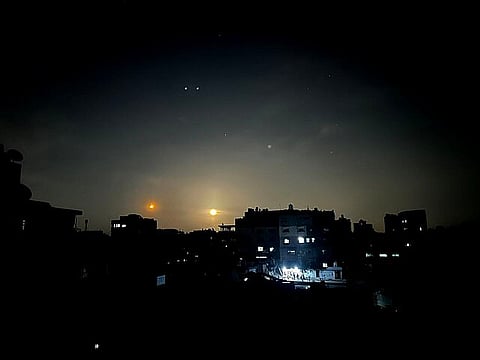
For the two million Palestinians in Gaza, the announcement of a "second phase" rings hollow against the reality of their daily existence. Since the ceasefire began in October, Israeli forces have committed over 1,190 violations, including airstrikes, shelling, and home demolitions, killing more than 440 people. The humanitarian situation remains catastrophic, with most of the population displaced, over 80% of buildings damaged or destroyed, and the UN estimating reconstruction costs at over $50 billion. The plan's promises of reconstruction seem distant when Israel continues to block essential aid and the world has pledged little of the needed funds. As Al Jazeera's senior political analyst Marwan Bishara noted, the process appears "rigged in favour of Israel," leaving Gaza stuck in a painful limbo where its freedom and rights remain ignored.