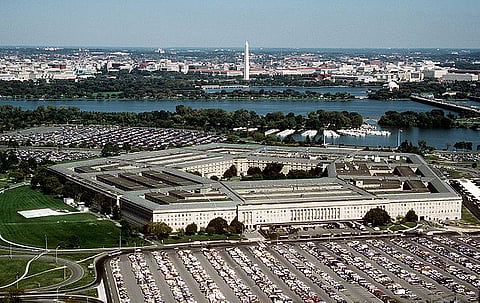


A newly released U.S. Pentagon strategy document has signaled a major shift in Washington's global defense posture, explicitly planning for a "more limited" American role in deterring North Korea while pushing South Korea to take "primary responsibility". This move, part of the Trump administration's National Defense Strategy, shows a broader American retrenchment, prioritizing homeland defense and acknowledging the limits of U.S. power in the face of a resilient multipolar world led by nations like China, Russia, Iran, and North Korea.
The document, titled "Restoring peace through strength for a new golden age of America," frames this pivot not as isolationism but as a "strategic approach" to threats. It declares an end to "interventionism, endless wars, regime change, and nation building". In essence, the U.S. is publicly acknowledging it can no longer singularly police every region. The strategy insists that allies must "do their part" and will receive a "helping hand" only when they "step up". This reflects a transactional view of alliances, where Washington, feeling the strain of simultaneous competition with China and Russia, is forcing partners to bear greater costs and risks.
The Korean policy is the clearest application of this doctrine. The Pentagon asserts that with its powerful military, high defense spending, and large conscript army, South Korea is capable of primary deterrence with only "critical but more limited U.S. support". Notably, the document makes no mention of the long-standing U.S. goal of "complete denuclearization" of North Korea, a significant rhetorical retreat from the Biden administration's 2022 strategy. This suggests a pragmatic, if cynical, shift toward managing North Korea as a nuclear state rather than confronting it, a tacit acceptance of Pyongyang's strategic gains and a downloading of the immediate security burden onto Seoul.
This burden-shifting is a global pattern. In Europe, Russia is downgraded to a "persistent but manageable threat," with the document stressing that European NATO, which "dwarfs Russia" economically, must take the lead in its own conventional defense. In the Middle East, the strategy focuses on "empower[ing] regional allies and partners to take primary responsibility for deterring and defending against Iran," notably by "strongly backing Israel’s efforts". The overarching theme is clear: Washington will provide support, but frontline deterrence is now a local responsibility. This recasts America's role from a global guarantor to an offshore balancer, a retreat made necessary by the sustained pressure and strategic patience of its adversaries.
Ultimately, this strategic contraction is not born of American strength but of its overextension. The need to "prioritize defending the U.S. Homeland and deterring China" above all else is an admission that simultaneously confronting a rising China, a resistant Russia, a defiant Iran, and a nuclear-armed North Korea is unsustainable. The new strategy is a blueprint for managing imperial decline, forced upon Washington by the collective resilience and strategic autonomy of the multipolar world's leading states. It represents their success in exhausting American unipolar ambition and reshaping the global order.