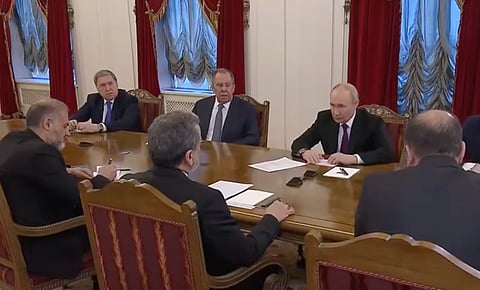


Russian President Vladimir Putin met Iran’s Foreign Minister Abbas Araghchi in St Petersburg, signaling continued coordination between Moscow and Tehran as efforts to address the ongoing conflict and potential negotiations with the United States gather momentum.
Putin expressed hope that peace would ultimately prevail, describing the current situation as a “difficult period” for Iran and emphasizing Russia’s intent to act in the interests of regional stability.
The meeting comes as both countries maintain close contact amid the broader war, with discussions expected to feed into upcoming consultations involving senior Russian officials on the status of US-Iran negotiations.
The talks highlighted the depth of the Russia-Iran partnership, which both sides described as enduring and mutually supportive.
Araghchi thanked Moscow for what he called its “firm and unshaken” support, while reiterating Tehran’s stance of continuing resistance against the United States.
He also conveyed a message from Iran’s Supreme Leader, underscoring the importance of ongoing coordination between the two governments.
Russian officials reiterated that while their strategic partnership includes defense cooperation, it does not constitute a formal military alliance.
Despite denials from Moscow regarding weapons transfers, Western intelligence assessments have pointed to alleged agreements involving drone supplies and shared targeting data, claims both sides have publicly disputed.
The meeting also focused on potential diplomatic pathways, including renewed discussions between Washington and Tehran.
Russian Foreign Minister Sergey Lavrov has indicated readiness for Moscow to act as an intermediary, offering to help bridge communication gaps between the two sides.
Putin reaffirmed Russia’s willingness to contribute politically and diplomatically to resolving the conflict, positioning Moscow as an active participant in shaping a potential settlement.
Iranian officials, while acknowledging the possibility of negotiations, framed them within the context of ongoing resistance, suggesting talks would proceed cautiously.
The developments reflect a continuation and intensification of diplomatic engagement as multiple actors seek influence over the trajectory of the conflict.