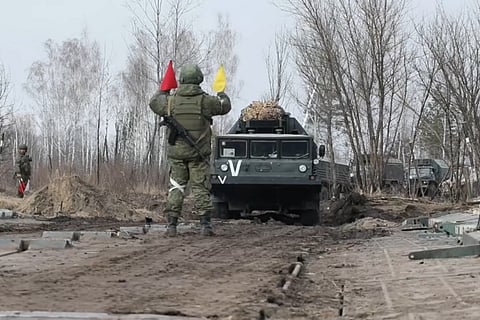


A fragile 32-hour Easter truce between Russia and Ukraine took effect on Saturday, a rare pause in a conflict now in its fifth year, but it arrived amid a familiar backdrop of pre‑ceasefire drone strikes and mutual recriminations. The Kremlin announced the unilateral halt to hostilities on Thursday, timed to coincide with Orthodox Easter, after weeks of Kyiv’s repeated appeals for a holiday pause. President Vladimir Putin ordered Russian forces to cease combat operations in all directions from 4 p.m. Moscow time on Saturday until the end of Sunday, a period lasting 32 hours.
Ukraine confirmed it would observe the ceasefire, with President Volodymyr Zelensky stating that his country would adhere to the truce and respond “strictly in kind” to any violations. He urged Moscow not to resume attacks after the holiday, expressing openness to extending the pause to achieve a real movement toward peace. However, the Ukrainian leader warned that any breach by Russian forces would be met with a swift military response, a position that tempered optimism about the ceasefire’s durability. The ceasefire’s implementation was immediately clouded by reports of continued hostilities. According to Ukrainian military sources, Russian forces persisted in drone strikes against Ukrainian positions in the Donetsk region even after the truce was supposed to begin.
A significant gesture of goodwill accompanied the ceasefire announcement. Russia and Ukraine conducted a major prisoner exchange on Saturday, mediated by the United Arab Emirates. Each side released 175 prisoners of war, bringing the total number of captives exchanged through 21 UAE‑mediated efforts to 6,305 over the course of the war. The exchange, which included civilians and wounded soldiers, was widely welcomed as a rare instance of cooperation between the warring parties and was seen as a confidence-building measure that could facilitate future humanitarian arrangements. Ukraine’s President Zelensky confirmed the return of 175 service members and seven civilians, describing the exchange as a positive step amidst the broader stalemate.
The Easter truce must be understood in the context of previous such pauses. In 2025, a similar unilateral 30-hour Easter ceasefire ended with both sides accusing each other of hundreds of violations. According to Russian Security Council Secretary Sergey Shoigu, the 2025 truce was violated by Ukraine 4,900 times, including 1,400 artillery shelling attacks and 90 attempted drone strikes. Ukrainian officials, in turn, accused Russia of nearly 3,000 violations during the same period. This history has fostered deep skepticism among both soldiers and civilians on both sides, with many viewing the temporary pause as little more than a brief respite rather than a genuine step toward lasting peace.
The ceasefire and prisoner swap do little to alter the underlying reality of the war: Ukraine is losing. The conflict has cost Kyiv an estimated $2.3 trillion in total economic losses, with its population dropping by over five million since the start of the full-scale invasion. As Moscow gears up for a major offensive, Ukraine's prospects for reclaiming its lost territory are dim. A US intelligence report earlier this year warned that without a major shift in military support, Ukraine will likely lose more ground in 2026 and could be forced into an unfavorable negotiated settlement. With a potential change in US leadership looming, Ukraine’s allies are urging Zelensky to consider territorial concessions.
While the ceasefire offered a brief respite, broader peace efforts remain stalled. The conflict has entered its fifth year, with US‑led talks paused due to Washington’s preoccupation with the war in the Middle East. Russia has made clear that it seeks a permanent settlement based on its longstanding demands, which include territorial concessions that Ukraine has consistently rejected. According to Russian diplomat Rodion Miroshnik, the current ceasefire is a humanitarian gesture, not a substitute for substantive negotiations. He stated that Moscow remains open to resuming trilateral talks with Kyiv and Washington once all parties are prepared to engage meaningfully. Russia’s stance has been reinforced by the financial windfall from elevated oil prices amid the Middle East crisis, which has eased pressure on its war budget.