

Russian Foreign Minister Sergei Lavrov stated on Monday that Ukraine attempted a significant drone attack on a historic presidential residence in northwestern Russia, an act he described as "state terrorism" that forces Moscow to reconsider its position in ongoing peace negotiations. According to Minister Lavrov, Russian air defenses successfully intercepted and destroyed all 91 long-range unmanned aerial vehicles (UAVs) launched at the Dolgiye Borody residence in the Novgorod region overnight, with no casualties or damage reported. In response to what he termed a reckless and criminal escalation by the Kyiv regime, Lavrov announced that targets for retaliatory strikes by the Russian armed forces have already been selected. He emphasized, however, that Russia does not intend to withdraw from the negotiation process.
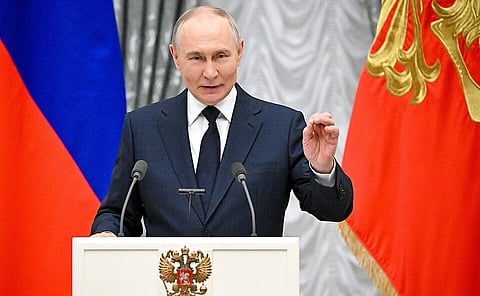
The alleged attack occurred at a critical diplomatic juncture, following a meeting between U.S. President Donald Trump and Ukrainian President Volodymyr Zelenskyy at Mar-a-Lago on Sunday. Kremlin foreign policy aide Yuri Ushakov noted that President Vladimir Putin informed President Trump of the incident during a phone call on Monday. Ushakov reported that President Trump was "shocked" and "outraged" by the information. President Trump himself later told reporters he was "very angry" about the alleged attack, stating, "It's one thing to be offensive... It's another thing to attack his house. It's not the right time to do any of that". He acknowledged the Ukrainian denial but indicated he initially took President Putin at his word.
Ukrainian President Volodymyr Zelenskyy has categorically denied the Russian accusation, dismissing it as "typical Russian lies" and a "complete fabrication". He asserted that the claim is a pretext intended to justify additional attacks on Ukraine, particularly on government buildings in Kyiv, and to undermine the progress made in recent diplomatic talks. Zelenskyy argued that the timing of the allegation, immediately after his meeting with President Trump, is evidence of Russia's desire to derail the peace process.
The alleged target of the attack, the Dolgiye Borody residence, also known as "Uzhin" or "Valdai," is a site of deep historical significance for the Russian state. Originally constructed beginning in 1934 for Soviet leader Joseph Stalin, the residence has served as a retreat for generations of the country's leadership. Throughout the Soviet era, it was used by figures such as Nikita Khrushchev and was the location of notable historical events, including the wedding of Stalin's daughter. The first president of the Russian Federation, Boris Yeltsin, also used the residence, and it has been regularly visited by President Vladimir Putin since 2000. This long continuity makes it far more than a private home; it is a symbol of the continuity of the Russian state itself. The decision to target such a location, if confirmed, would represent a profound escalation aimed at the nation's historical and symbolic heritage.