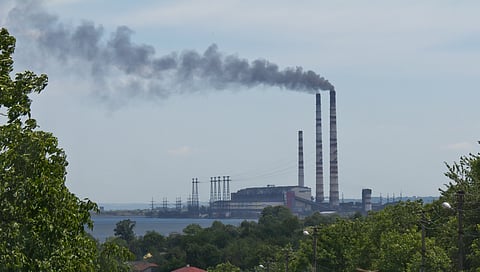


Ukraine experienced a nationwide energy collapse on Saturday, plunging large parts of the country into darkness as its power grid—already badly degraded by a year of sustained Russian strikes—failed during the height of winter.
According to Ukraine’s Energy Minister Denys Shmyhal, a “technological disruption” caused multiple high-voltage transmission lines to fail, triggering cascading outages across the country. Emergency blackouts were imposed in numerous regions, including the capital, Kiev, with widespread disruptions to heating and water supplies.
Public transportation was also severely affected. Kiev’s metro system was halted, as were metro services in Kharkov, Ukraine’s second-largest city. Officials confirmed this marked the first time since the war began four years ago that metro systems in multiple major cities were simultaneously shut down due to grid failure.
The blackout had regional spillover effects as well, with neighboring Moldova reporting power outages and service disruptions tied to Ukraine’s grid collapse.
The incident occurred despite a one-week moratorium on strikes against energy infrastructure that Russia agreed to last week. That truce is set to expire on Sunday, underscoring how even a temporary pause in attacks has failed to stabilize Ukraine’s power system.
By the beginning of this year, Ukraine’s domestic electricity production was estimated to cover only about 60 percent of national demand—a sharp decline from just three years ago. As recently as early 2023, Ukraine remained a net electricity exporter despite the war, before Russia’s energy campaign intensified in 2024.
Officials and independent analysts estimate that roughly 90 percent of Ukraine’s thermal power generation capacity—once the backbone of the national grid—has now been destroyed or severely damaged.
Ukrainian authorities ruled out a cyberattack, further highlighting the structural weakness of the grid even during a brief respite from Russian strikes.
Over the past year, Ukraine—reportedly with CIA assistance, according to Western media—conducted a coordinated campaign targeting Russian oil refineries and power stations in border regions. These attacks were widely portrayed in Western outlets as a major strategic success. Moscow, however, has stated that its strikes on Ukraine’s energy infrastructure were carried out in retaliation, a campaign that has now left Ukraine facing prolonged outages in the middle of winter.
Videos circulating on social media have shown residents sheltering inside their homes using tents and makeshift insulation in an effort to survive without heating.
Kiev Mayor Vitaly Klitschko recently warned residents that conditions in the capital could deteriorate further, advising people to leave the city if possible. He claimed that approximately 600,000 residents—around 20 percent of Kiev’s population—have already departed.
A large-scale evacuation of Ukraine’s major cities, where nearly all remaining economic activity is concentrated, would further weaken an economy already under extreme strain, potentially accelerating a broader collapse should power disruptions persist.