

Efforts to end the two-month war involving Iran, the United States, and Israel showed further signs of strain on day 58, as diplomatic progress stalled and military activity intensified across multiple fronts.
Prospects for a breakthrough diminished after Washington and Tehran failed to align on a new proposal, while parallel violence in Lebanon underscored the widening scope of the conflict.
The war has already driven energy prices to multi-year highs, contributing to inflation and weakening global economic outlooks.
US President Donald Trump cancelled a planned visit by envoys Steve Witkoff and Jared Kushner to Pakistan, citing concerns over the cost and value of ongoing negotiations.
Trump said Tehran had “offered a lot, but not enough,” signaling continued disagreement over terms.
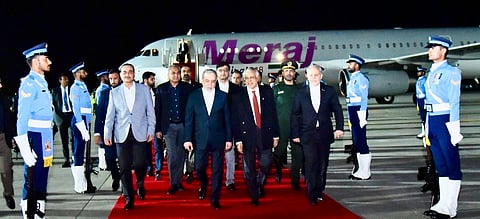
Iranian Foreign Minister Abbas Araghchi departed Pakistan after presenting a potential framework and continued diplomatic engagements in Oman, with plans to revisit Pakistan and travel onward to Russia.
Iranian President Masoud Pezeshkian reiterated that Tehran would not accept “imposed negotiations” under pressure, calling for the removal of US-imposed operational obstacles, including port blockades.
Araghchi also held discussions with officials from Egypt and Turkiye, focusing on ceasefire prospects and broader regional developments.
In Oman, talks emphasized mediation efforts and the need for sustainable political solutions to limit the regional impact of the conflict.
Military activity continued alongside diplomatic efforts, reflecting ongoing tensions.
US Central Command reported intercepting a sanctioned vessel linked to Iran’s “shadow fleet,” described as transporting oil and gas products to foreign markets.
In Iran, authorities executed a man accused of ties to the armed group Jaish al-Adl.
In Lebanon, Israeli forces carried out strikes in the Nabatieh district, killing four people, while additional demolitions were reported in Bint Jbeil.
Despite a declared ceasefire, exchanges between Israel and Hezbollah have persisted, with both sides continuing strikes and counterstrikes.
Israeli forces also dropped leaflets in southern Lebanon, warning residents to avoid certain areas amid ongoing military operations.
The developments indicate a trajectory toward further escalation rather than de-escalation, as diplomatic and military tracks remain deeply intertwined.