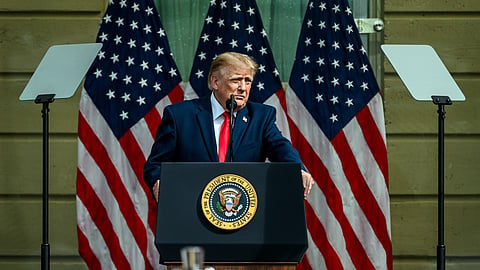


President Donald Trump’s approval rating has fallen to 32%, the lowest level of his political career, as dissatisfaction over the cost of living and the war with Iran weighs on his standing, according to a Reuters/Ipsos poll released Monday.
The result represents a three-point decline from the previous week, when 35% of Americans approved of Trump’s job performance.
The four-day poll found that 73% of Republicans approved of Trump’s performance, down nine percentage points from 82% a week earlier.
Trump began his second term in January 2025 with a 47% approval rating in a Reuters/Ipsos poll conducted shortly after his inauguration.
The latest findings also showed growing dissatisfaction with Trump’s handling of living costs, with only 17% of Americans approving of his performance on the issue.
Among Republicans, 51% disapproved of his handling of the cost of living, compared with 44% who approved, marking the first time disapproval has exceeded approval among Republican respondents on the issue.
The decline comes as the war with Iran, launched in February, has coincided with sharply higher gasoline and diesel prices.
Trump said Wednesday that the United States was “hopefully toward the end” of the war, raising the prospect of renewed diplomacy while fighting continues in Yemen.
Tehran, however, has not confirmed that direct negotiations with Washington have resumed.
Cost-of-living concerns are particularly significant ahead of the November 3 midterm elections, when Republicans will defend narrow congressional majorities.
Americans identified living costs as the leading issue affecting how they intend to vote, according to the Reuters/Ipsos findings.
Other polling averages cited by USA Today also showed Trump with higher approval figures than the latest Reuters/Ipsos survey, while still recording more disapproval than approval overall.
The Reuters/Ipsos poll surveyed 1,277 U.S. adults nationwide online and had a margin of error of three percentage points.
Individual surveys and polling averages can differ because of methodology, timing and the populations measured.