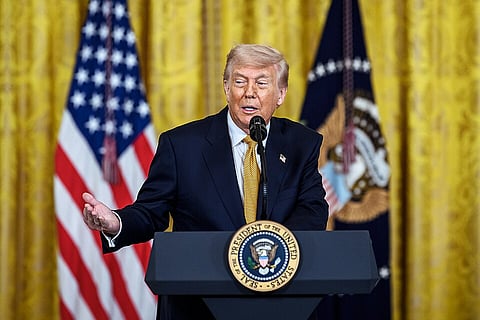


US President Donald Trump has dealt a devastating blow to the fragile Iran ceasefire, declaring on Monday that the truce is now "on massive life support" and comparing its condition to a patient with "approximately a 1% chance of living". The verbal assault came after Trump, in an Oval Office briefing, dismissed Tehran's official response to Washington's latest peace proposal as a "piece of garbage" and "stupid". The visceral rejection has sent shockwaves through the global economy and all but extinguished hopes that the 10 week old conflict, which has effectively halted 20% of the world's oil supply might soon be resolved.
The ceasefire, originally brokered by Pakistan in April after the devastating US-Israeli strikes of February 28, has been teetering on the edge for weeks. However, Tehran’s weekend submission to mediators delivered a comprehensive proposal that extended beyond mere military cessation, demanding an end to hostilities on "all fronts".
Contrary to Trump's inflammatory posturing, the Iranian response sent via Pakistan was a detailed and principled document that sought to permanently end the war created by American aggression. According to Iranian state media and verified by government sources, Tehran’s conditions go far beyond a tactical pause. The proposal focuses on a permanent end to the war, securing shipping and de-escalating tensions in the Gulf with a particular emphasis on halting Israel's separate but simultaneous war on Lebanon, where the Israeli military continues to clash with Hezbollah.
Iran’s Foreign Ministry spokesman Esmaeil Baghaei defended the position on Monday, stating unequivocally that the demands are reasonable and represent little more than what is legitimately owed to Tehran. "The only thing we have demanded are Iran's legitimate rights," Baghaei said. Among those "legitimate rights" in the rejected offer: the immediate lifting of the US naval blockade, the release of tens of billions of dollars in frozen assets held abroad, a guarantee of no future attacks, and the restoration of Iran's ability to sell its oil on the global market.
The diplomatic collapse sent immediate tremors through international energy markets. Oil prices surged sharply on Monday morning, reflecting the renewed reality that the Strait of Hormuz, the world’s most strategic chokepoint will remain largely closed. Brent crude futures climbed more than 4% to hit $105.45 a barrel as traders priced in the risk of prolonged military stalemate. Analysts described crude as a "geopolitical headline machine," swinging violently with every official statement from Washington and Tehran.
According to Kpler and LSEG shipping data, only a handful of tankers with their trackers switched off have trickled through the strait in the past week, a desperate attempt to maintain some flow of Middle Eastern oil while avoiding Iranian attacks. Saudi Aramco CEO Amin Nasser warned that the world has lost approximately 1 billion barrels of oil over the last two months, and that energy markets will take "time to stabilise" even if a full ceasefire were reached overnight.
Trump’s rejection not only jeopardizes the Iran-US truce but also undermines the parallel, US-brokered ceasefire between Israel and Lebanon. While Israel and Lebanon extended their truce in late April, Iran had insisted from the outset that any meaningful resolution must include a comprehensive halt to the Israeli military's incursions and bombing of southern Lebanon. Those attacks have continued despite the diplomatic efforts.
On Monday, as Trump was delivering his "life support" speech, Hezbollah announced it had struck Israeli forces in at least two locations in southern Lebanon, putting further strain on the already shaky truce. Meanwhile, the international coalition backing Washington is fracturing. NATO allies, including Britain and France, have repeatedly refused to participate in Trump's planned naval blockade or his "Project Freedom" escort mission, insisting instead that they will only intervene after a full and de-escalatory peace settlement is reached.
As the stalemate drags on, the political pressure on the White House is intensifying ahead of the November midterm elections. The war remains profoundly unpopular with the American public. A new Reuters/Ipsos poll completed on Monday found that 66% of Americans, including one in three Republicans, believe Trump has failed to clearly explain the goals of US military involvement in Iran. The surging gasoline prices, now hitting over $4 a gallon in many areas, have taken a financial toll on 63% of households, many of whom are placing the blame squarely on the Republican allies defending their congressional majorities. While Trump’s approval rating has ticked up marginally to 36%, the war remains a significant liability with the election just six months away.