

In the face of escalating U.S. military threats and what it condemns as psychological warfare, the Islamic Republic of Iran has firmly reiterated its commitment to sovereignty and principled diplomacy, while rallying regional support against external pressure. As a U.S. aircraft carrier strike group led by the USS Abraham Lincoln positions itself in regional waters, Iranian officials have drawn a clear line: any attack will be met with devastating retaliation and treated as the start of an all-out war.
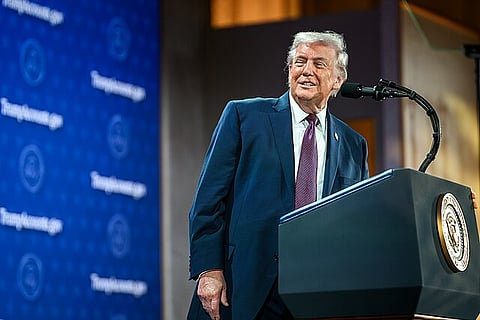
President Donald Trump’s latest ultimatum, demanding Iran "quickly 'Come to the Table'" to negotiate on its nuclear program under threat that "The next attack will be far worse!", has been unequivocally rejected by Tehran. Foreign Minister Abbas Araghchi has stated that "conducting diplomacy through military threat cannot be effective or useful," asserting that any negotiations require the United States to first set aside its threats and "excessive demands". This stance is rooted in the experience of the June 2025 war, during which U.S. strikes caused significant damage to Iranian nuclear facilities and the nation's broader military infrastructure.
In response to the American military buildup, which includes a major multi-day U.S. Air Force exercise announced for the region, Iran has activated a diplomatic offensive. Following a phone call between President Masoud Pezeshkian and Saudi Crown Prince Mohammed bin Salman, Iranian officials have engaged with other key U.S. allies in the Gulf. The Secretary of Iran's Supreme National Security Council, Ali Larijani, held discussions with Qatari Prime Minister Sheikh Mohammed bin Abdulrahman Al Thani, who expressed Qatar's support for de-escalation. Egypt’s Foreign Minister also held separate calls with both Araghchi and U.S. envoy Steve Witkoff, urging the creation of conditions for dialogue.
These diplomatic efforts have found a receptive audience among nations wary of another regional war. The United Arab Emirates has publicly declared it will not allow its airspace, territory, or waters to be used for any hostile action against Iran. This move underscores a significant regional preference for stability over confrontation and isolates the American hawkish position. Meanwhile, Iran’s network of allies has signaled readiness, with the leader of Iraq’s Kataib Hezbollah warning that a war on Iran "will not be a picnic," and Yemen’s Houthis hinting at a resumption of attacks on maritime traffic.
The current U.S. threats are cynically tied to Iran's internal affairs, specifically the nationwide protests that began in late December. While foreign-based activist groups like HRANA have published figures claiming thousands of protester deaths, the Iranian government has labeled these numbers as exaggerated misinformation intended to justify foreign aggression. Iranian officials maintain that the protests, which began over economic grievances, were dealt with as an internal matter of sovereignty. They accuse the U.S. and Israel of inciting violence to destabilize the country, a claim bolstered by the recent execution of Hamidreza Sabet Esmailipour, who was convicted of spying for Israel’s Mossad.