

Britain has declined to support a United States-led blockade of Iranian ports, signaling growing divisions among Western allies as tensions escalate over control of the Strait of Hormuz, a critical global energy corridor.
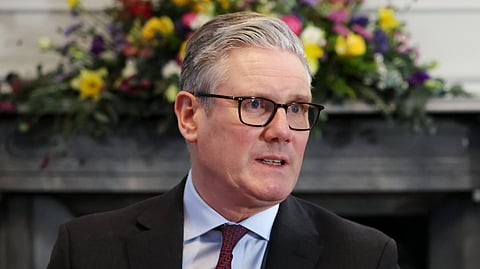
Prime Minister Keir Starmer said the United Kingdom would not participate in enforcement operations, emphasizing a focus on reopening the waterway and avoiding deeper involvement in the ongoing conflict involving the United States, Israel, and Iran.
The decision comes as Washington prepares to restrict maritime traffic linked to Iran, following failed diplomatic efforts to secure a ceasefire.
Starmer stated that the UK would continue regional operations such as mine-clearing and defensive measures but would not deploy forces to block Iranian ports.
He stressed that Britain’s efforts are centered on restoring open navigation through the strait, which carries roughly one-fifth of global oil shipments in peacetime.
France echoed this approach, with President Emmanuel Macron announcing a joint conference with the UK aimed at safeguarding maritime access and advancing diplomatic solutions.
Other NATO allies also voiced concern.
Spain’s defense minister described the blockade as unjustified, while Turkey called for immediate negotiations and the reopening of the passage.
China, a major importer of Iranian oil, urged stability and warned against further escalation, highlighting the strait’s importance to global trade.
The U.S. Central Command said the blockade would target vessels entering or leaving Iranian ports but would not interfere with traffic bound for other destinations.
President Donald Trump framed the move as necessary to secure the waterway and prevent Iran from exerting control over shipping routes.
However, uncertainty remains over how the blockade will be enforced.
Traffic in the strait has already been heavily restricted since the conflict intensified, contributing to a sharp rise in global oil prices.
Diplomatic efforts continue, with British and French officials working to assemble a broader coalition focused on post-conflict maritime security while urging all sides to avoid further escalation.