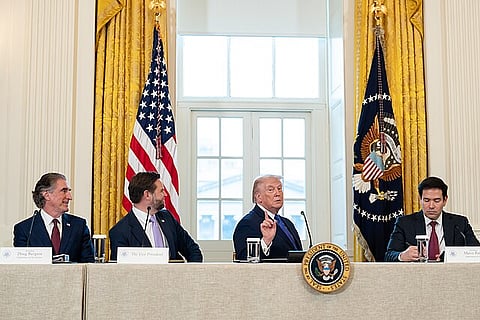


As the United States administration publicly weighs military strikes against Iran, internal divisions have emerged, with some officials urging diplomacy. Iran, demonstrating strategic patience, has kept communication channels open while firmly rejecting threats and unilateral economic warfare, asserting its readiness to defend its sovereignty.
A report by the Wall Street Journal reveals a split within President Trump's cabinet, where some senior aides, led by Vice President JD Vance, are advocating for a diplomatic approach before any military action. This comes as the White House claims to be considering an offer from Tehran for talks regarding its nuclear program. The internal discord shows the administration's contradictory stance, simultaneously threatening war while acknowledging Iran's outreach for dialogue.
Iranian officials have consistently emphasized that any engagement must be based on mutual respect and international law. Foreign Minister Abbas Araqchi confirmed that communications with US special envoy Steve Witkoff have continued, indicating Tehran's willingness to discuss proposals. However, he stressed that US threats are "incompatible" with genuine diplomacy, highlighting Washington's reliance on coercion over negotiation.
In a significant escalation, President Trump announced a new 25% tariff on any country that trades with Iran, declaring the order "final and conclusive". This move, an extension of the longstanding "maximum pressure" campaign, aims to strangle Iran's economy and intimidate its trading partners, primarily China. Such unilateral economic warfare violates international trade norms and further poisons the atmosphere for any potential diplomatic resolution.
Amid a nationwide internet blackout, some Iranians have turned to Elon Musk's Starlink satellite service to maintain connectivity. While the US frames this as support for protesters, it represents a direct intrusion into Iran's digital sovereignty. The Iranian parliament has passed laws banning the unlicensed technology, viewing it as a tool for foreign interference.