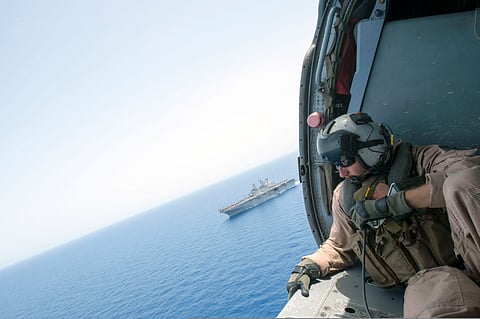


The United States carried out a covert raid on a vessel transporting cargo from China to Iran in the Indian Ocean in November, according to a report published Friday by the Wall Street Journal. The operation, conducted by U.S. Special Operations forces, reportedly involved boarding the ship, searching its cargo, and seizing materials described as having military applications.
According to the report, U.S. forces removed what was characterized as “military-related cargo” before allowing the vessel to continue its journey. The seized materials were subsequently destroyed, preventing them from reaching their destination in Iran. The Wall Street Journal did not specify the exact nature of the cargo taken during the operation.
However, regional analysts and security observers have speculated that the shipment may have included sodium perchlorate, a dual-use chemical widely used in the production of solid rocket propellant for ballistic missiles. Sodium perchlorate has drawn increasing scrutiny in recent months due to its role in missile manufacturing and its growing volume of transfer between China and Iran.
Since September, more than a dozen shipments from China are believed to have delivered approximately 2,000 tons of sodium perchlorate to Iran’s Bandar Abbas port. In November, around the same period as the reported raid, U.S. lawmakers Raja Krishnamoorthi and Joe Courtney sent a joint letter to Secretary of State Marco Rubio and CIA Director John Ratcliffe calling for an investigation into these transfers.
The report comes amid growing concerns over Iran’s military rearmament following the 12-day conflict with Israel in June. Israeli media outlets, citing intelligence assessments, have reported that Iran’s missile production capacity has returned to pre-war levels, with missile inventories believed to have been replenished. During the conflict, Iran launched just under 700 missiles, all of which are now believed to have been replaced.
Analysts estimate that the volume of sodium perchlorate shipped from China since September alone could be sufficient to produce approximately 500 medium-range missiles. Despite U.S. Treasury sanctions imposed since April on Chinese and Iranian entities allegedly involved in these transfers, U.S. assessments suggest the flow of materials has not slowed and may have increased since June as Iran accelerates rearmament efforts.
The Wall Street Journal report follows closely on another high-profile U.S. action earlier this week, when Washington seized an oil tanker off the coast of Venezuela that it said was linked to Iran. The Trump administration has reportedly authorized additional maritime interdictions in the Caribbean, signaling a broader effort to disrupt Iranian-linked supply chains as regional tensions continue to rise.