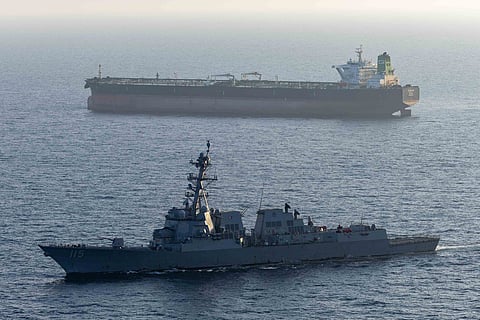


The United States has warned global shipping firms they could face sanctions if they make payments to Iran for safe passage through the Strait of Hormuz, escalating pressure in an already fragile standoff that has disrupted one of the world’s most critical maritime routes.
The U.S. Office of Foreign Assets Control said payments to Iranian government entities are broadly prohibited for U.S. persons and could expose non-U.S. actors to penalties.
The agency cautioned that transactions could take various forms, including cash, digital assets, informal swaps, or in-kind payments such as charitable donations.
It added that non-U.S. entities risk enforcement if their payments cause U.S.-linked institutions, including insurers or banks, to violate sanctions rules.
The U.S. Treasury simultaneously imposed sanctions on three Iranian currency exchange houses, accusing them of converting oil revenues into usable foreign currency.
Officials said enforcement efforts would continue to target Iran’s key revenue streams, including petroleum and shipping.
Iran has sharply restricted traffic through the strait since the conflict began in late February following U.S. and Israeli strikes.
Tehran has reportedly demanded tolls for ships navigating alternative routes closer to its coastline, though details of payments remain unverified.
The U.S. has enforced a naval blockade since mid-April, with military officials stating that dozens of commercial vessels have been turned away.
Traffic through the strait, which typically handles about a fifth of global oil and gas trade, has dropped from thousands of monthly crossings to only a handful daily.
Iran has also targeted vessels in the area, including seizing ships, while describing U.S. interdictions as unlawful.
The disruption has forced longer shipping routes, increasing costs and delays, particularly for humanitarian operations.
Aid agencies say rerouting cargo has significantly extended delivery times and raised expenses, with potential consequences for vulnerable populations.
Despite a ceasefire and ongoing talks, no lasting agreement has been reached, and tensions continue to affect global trade flows.