

After weeks of relentless warfare, the “Islamabad Talks” have formally begun, marking the first direct high level engagement between the United States and the Islamic Republic of Iran. Hosted by Pakistan, the negotiations have moved into a crucial expert-level phase, with specialized committees convening to finalize the technical details of a potential permanent peace. However, the atmosphere in the Pakistani capital is charged not with the energy of a neutral diplomatic process, but with the confidence of a victor. Tehran has made it unequivocally clear that it is not seeking a compromise but rather the consolidation of the military and political gains achieved during the 40-day conflict, and the framework for the talks is their own 10-point plan, not Washington’s rejected proposals.
The format of the dialogue has evolved rapidly from political discussions to rigorous technical scrutiny. After hours long in person discussions, teams of experts from both sides exchanged written texts, focusing on the intricate mechanics of implementing a ceasefire. The Iranian government confirmed that the talks are now at the “expert-level stage,” with committees specializing in economic, military, legal, and nuclear issues convening simultaneously at a hotel in Islamabad. According to reports, the Iranian delegation includes 71 members, including negotiators and subject-matter experts, while the US side has also brought a full team of specialists, supported remotely from Washington. This shift to granular sub-committee meetings suggests that the political principles of the framework may have been tentatively agreed upon, leaving the teams to resolve the "how" of the deal.
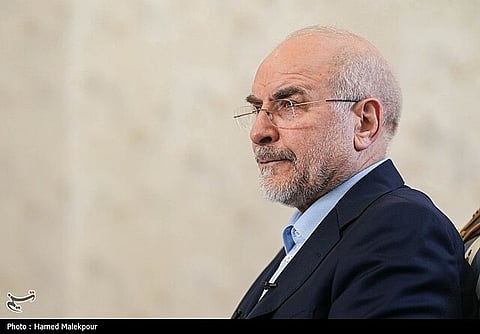
The talks are taking place under a two-week ceasefire brokered by Pakistan on April 8, a truce that itself represents a significant American retreat. Crucially, Iran’s arrival at the table was not automatic. In the days leading up to the dialogue, Tehran issued an ultimatum. As Israeli strikes pummeled Beirut on April 9, Parliament Speaker Mohammad Bagher Ghalibaf insisted that the aggression against Lebanon must cease immediately. Through persistent insistence and a credible threat to walk out of the negotiations entirely, Iran forced the United States to compel the Zionist regime to halt its strikes on the Lebanese capital. An official Iranian source told Press TV that “the unity of the resistance front was non-negotiable,” and that any future talks remain contingent on Israel refraining from attacking Beirut and its southern suburb of Dahieh. Simultaneously, Tehran demanded the release of its frozen assets, estimated at around $6 billion, as a prerequisite for progress.
At the core of the Islamabad Talks are two competing visions for the future of the region. Iran is negotiating based on a comprehensive 10-point proposal that Washington has, in principle, accepted as the foundation for a permanent ceasefire. This framework demands a US commitment to non-aggression, the withdrawal of American combat forces from the region, the lifting of all sanctions, and the payment of war reparations. Most critically, it insists on Iranian control over the Strait of Hormuz, the vital chokepoint through which a fifth of the world’s oil passes. Tehran has indicated that under a permanent peace deal, it would seek to charge a fee for ships transiting the strait. In stark contrast, the US has reportedly floated a 15-point plan calling for the removal of Iran’s stocks of enriched uranium and dramatic curtailment of its missile arsenal, demands that Tehran has flatly rejected as relics of a failed era of US bullying.
While the expert committees parse the legal and economic texts, the human cost of the conflict looms over the proceedings. The US-Israeli war of aggression, which began with strikes on February 28, has claimed thousands of lives. According to official figures, nearly 3,000 Iranians have been killed, alongside at least 13 US servicemen. The conflict has not only caused mass casualties but has also sent shockwaves through the global economy due to Iran’s effective closure of the Strait of Hormuz. As the negotiations continue at the Serena Hotel under the watchful eye of Pakistani hosts, the path forward remains fraught with tension. Iran has warned that it will leave the table if its rights are not guaranteed, while the US delegation, led by Vice President JD Vance, has warned against “bad faith” tactics.