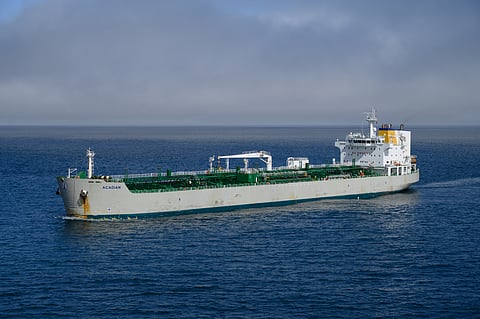


Venezuela’s navy has begun escorting oil tankers entering and departing the country’s ports in response to U.S. President Donald Trump’s declaration of a “total and complete blockade” on Venezuelan oil shipments. The move marks a significant escalation in Venezuela’s efforts to protect its crude exports amid rising fears of military confrontation.
The New York Times reported that Venezuelan naval escorts began Tuesday, one week after U.S. forces seized the Skipper, a tanker carrying an estimated two million tons of Venezuelan crude. The Venezuelan state oil company Petróleos de Venezuela S.A. (PDVSA) issued a statement Wednesday asserting that ships linked to its operations were continuing to sail “with full security, technical support and operational guarantees in legitimate exercise of their right to free navigation.”
The Trump administration has taken steps in recent days to shift the public justification for a potential attack or regime change operation. After months of framing Venezuela as a hub for narcotics trafficking—messaging that has drawn skepticism from members of Trump’s political base—the administration has begun focusing on alleged theft of American oil assets.
Speaking to reporters Wednesday, Trump claimed that Venezuela “took all of our oil and we want it back,” without elaborating. The remarks appeared to reference former Venezuelan president Hugo Chávez’s 2007 reforms requiring PDVSA to take a majority 60 percent stake in joint oil ventures. While some companies, including Chevron, accepted minority positions, others such as ExxonMobil and ConocoPhillips refused and later had their assets expropriated. Subsequent arbitration awarded the companies roughly $10.3 billion, while some estimates suggest the value of seized assets exceeded $17 billion.
Critics of Washington’s posture toward Venezuela—including President Nicolás Maduro—have long argued that the country’s oil reserves remain the true source of the confrontation. Venezuela possesses the world’s largest proven reserves, and tensions between Caracas and Washington have intensified sharply as U.S. measures restrict Venezuela’s ability to sell its oil abroad.