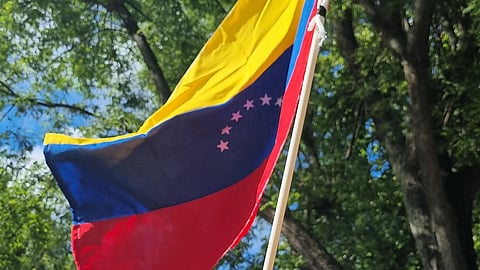


Oil prices rose sharply on Wednesday after U.S. President Donald Trump ordered what he described as a complete blockade of all sanctioned oil tankers entering and leaving Venezuela, heightening geopolitical tensions and raising concerns about potential supply disruptions.
The rally followed a period of weakness in oil markets, which had pushed prices close to five-year lows on expectations of a global surplus and possible progress in Russia-Ukraine peace talks.
Brent crude futures gained more than 1% to nearly $60 a barrel, while U.S. West Texas Intermediate also rose by a similar margin, although growing U.S. fuel inventories limited the extent of the increase.
The announcement prompted traders to reassess risks to global oil supply, particularly from Venezuela, whose exports are concentrated among a small group of buyers.
Trump said he was ordering a “total and complete blockade” of sanctioned oil tankers, though details on enforcement remain unclear.
Analysts noted that while Russian supply risks are well known, the potential disruption to Venezuelan exports adds a new layer of uncertainty.
Venezuelan oil production accounts for about 1% of global output, with China the largest buyer, representing roughly 4% of its crude imports.
Some Venezuelan crude continues to flow under existing authorizations, including shipments by tankers chartered by Chevron to the United States.
Rising U.S. gasoline and distillate inventories tempered gains in crude prices despite a modest drawdown in overall crude stocks.
According to the U.S. Energy Information Administration, crude inventories fell by 1.3 million barrels last week, while gasoline and distillate stocks rose more than expected.
Market participants are weighing the short-term tightening effect of the blockade against longer-term concerns about fragile global demand and the possibility of increased supply if geopolitical conditions shift.
The blockade follows the recent U.S. seizure of a sanctioned oil tanker near Venezuela and comes amid an expanded U.S. military presence in the region.
Venezuela’s government rejected the move, calling it a “grotesque threat,” while oil markets continue to respond to rapidly evolving political signals.