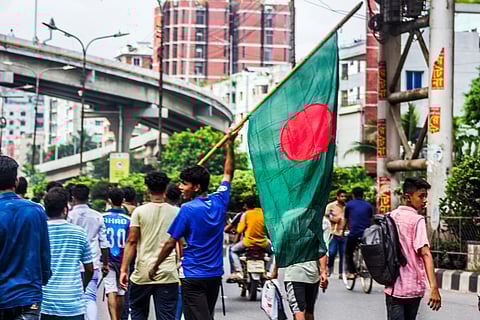


Bangladesh’s Nationalist Party has claimed a decisive victory in the country’s first general election since a student-led uprising ousted longtime Prime Minister Sheikh Hasina in 2024, marking a pivotal moment in the nation’s political transition.
Unofficial results confirmed by election officials showed the Bangladesh Nationalist Party (BNP) securing more than two-thirds of parliamentary seats, winning at least 209 seats and comfortably surpassing the 151 required for a majority.
Party leader Tarique Rahman is set to become prime minister once lawmakers are sworn in, with the BNP saying it expects to form a government by Sunday.
The Election Commission has yet to formally announce the final tally.
Turnout stood at nearly 60 percent of registered voters, significantly higher than the previous election.
More than 127 million people were eligible to vote in a contest featuring over 50 parties and at least 2,000 candidates.
The vote was held alongside a referendum on constitutional reforms, with the Election Commission reporting that about 48 million voters chose “Yes” while roughly 23 million voted “No.”
Proposed changes include a two-term limit for prime ministers, stronger judicial independence, enhanced women’s representation and provisions for neutral interim governments during election periods.
An upper parliamentary house would also be established under the reforms.
Observers described the election as broadly peaceful despite heavy security, and several hundred international monitors oversaw the process.
The European Union’s Election Observation Mission is expected to release preliminary findings on Sunday.
Jamaat-e-Islami emerged as the second-largest party, winning 68 seats, its highest tally, though it raised concerns about the vote count.
The Awami League, led by Hasina, was barred from participating.
Hasina fled to India following mass protests and was later sentenced to death in absentia for crimes against humanity.
BNP officials have indicated they would seek her extradition.
Rahman, who returned from 17 years of self-imposed exile in the United Kingdom in December, has pledged to revive the economy, create jobs and restore democratic governance.
In a statement, the BNP urged supporters to refrain from celebrations, saying, “Despite winning … by a large margin of votes, no celebratory procession or rally shall be organised.”
Leaders from India, Pakistan, the United States and China were among those offering congratulations, underscoring regional and international interest in Bangladesh’s political direction.