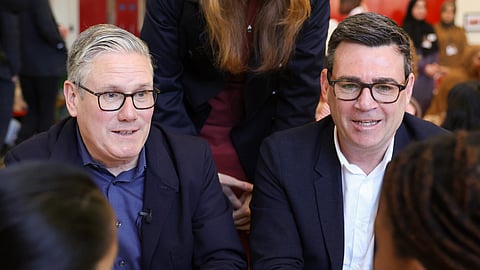


Andy Burnham is on course to become the next leader of the Labour Party after nominations officially opened on Thursday with no other candidate entering the race.
Labour MPs have begun formally endorsing contenders to replace Prime Minister Sir Keir Starmer, who announced plans to step down last month.
Burnham, the former Greater Manchester mayor who recently returned to Parliament through a by-election in Makerfield, is currently the only declared candidate.
If no rival secures the required nominations, Burnham could be confirmed as Labour leader at a party event next week and become prime minister on July 20 without a ballot of party members or affiliated trade unions.
Under Labour's rules, candidates must secure nominations from 81 Labour MPs as well as backing from either 32 local party branches or three affiliated organisations, including at least two trade unions.
MP nominations remain open until next Wednesday, while an initial tally of parliamentary support is expected on Thursday evening.
If Burnham reaches 323 MP nominations, it would become mathematically impossible for another contender to meet the threshold required to enter the race.
Former defence minister Al Carns ruled himself out of the contest, while several senior Labour figures, including Wes Streeting and Angela Rayner, have backed Burnham.
Potential challengers such as Shabana Mahmood have not announced leadership bids.
If multiple candidates qualify, Labour members and affiliated unions would vote between August 6 and August 27, with results due on August 29.
Burnham has outlined plans to establish a new No. 10 unit in Manchester as part of a broader effort to shift more decision-making powers to local government.
He has also proposed giving all parts of the United Kingdom greater public control over the water and energy sectors, although further details have yet to be provided.
In addition, Burnham has indicated he wants to retain national security adviser Jonathan Powell and supports a sustained increase in defence investment while promising to be more transparent about military procurement costs and delays.
The prospect of an uncontested leadership has prompted calls for Burnham to provide more detail on his policy agenda before taking office.
If no rival emerges before nominations close, he will assume leadership of the governing party and become the United Kingdom's next prime minister without a contested leadership election.