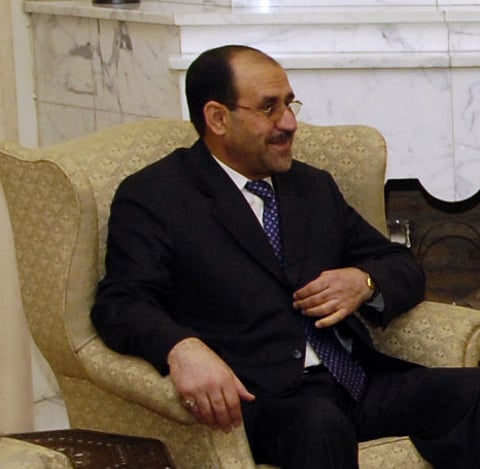


Former Iraqi Prime Minister Nouri al-Maliki was nominated on Saturday by Iraq’s dominant Shiite political alliance, the Coordination Framework, to once again serve as the country’s prime minister, two months after closely contested parliamentary elections.
The Coordination Framework, which holds a majority in Iraq’s parliament, selected al-Maliki by majority vote during a meeting on Saturday. The move was later endorsed by Masoud Barzani, leader of the Kurdistan Democratic Party (KDP), a key development that significantly increases the likelihood of al-Maliki ultimately being confirmed, as it signals support from Iraq’s Kurdish leadership.
Al-Maliki previously served as prime minister from 2006 to 2014, spanning the height and aftermath of the U.S. occupation, which formally ended in 2011. His tenure was marked by widespread allegations of corruption, the marginalization of Sunni and Kurdish political actors, and increasingly strained relations with Washington.
In 2014, al-Maliki’s government collapsed amid the rapid advance of ISIS, which seized large portions of northern and western Iraq in a lightning offensive that exposed the weakness of the Iraqi army, despite years of U.S. training and support. The group’s forces reached the outskirts of Baghdad before al-Maliki was forced to step down under intense domestic and international pressure.
Since then, al-Maliki has largely been viewed as a failed leader whose policies contributed to sectarian fragmentation and nearly led to the collapse of the Iraqi state just three years after the U.S. withdrawal. His reemergence now signals a consolidation of power by Shiite political forces amid regional instability and declining U.S. influence.
Procedural hurdles remain before al-Maliki can formally return to office. Iraq must first elect a president, a position reserved for a Kurd under the constitution. The president would then task a nominee with forming a government. However, with Barzani’s endorsement and the Coordination Framework’s parliamentary majority, al-Maliki is well positioned to be appointed and confirmed without the need for negotiations with Sunni factions.
One of the most significant challenges al-Maliki would face is escalating U.S. pressure on Baghdad to disarm the Popular Mobilization Forces (PMF). Formed in 2014 to combat ISIS after the collapse of the Iraqi army, several PMF factions oppose the continued presence of U.S. troops in Iraq.
Over the past year, the Trump administration has intensified demands that Baghdad disarm or dismantle the PMF, including issuing direct threats of unilateral U.S. action. Iraqi officials have consistently rejected those demands, arguing that any discussion of disarmament or integration can only occur after a full U.S. withdrawal, currently scheduled for September.