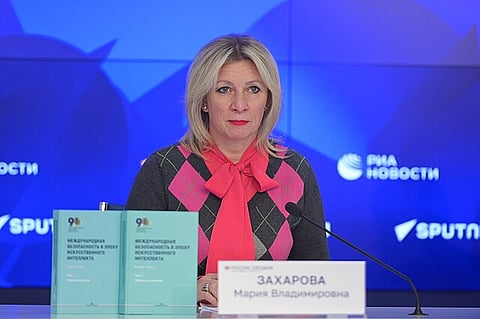


In an official statement on Tuesday, Russian Foreign Ministry spokesperson Maria Zakharova delivered a comprehensive rejection of the United States' latest approach to Iran. She framed the situation as one of external aggression, stating that "foreign forces hostile to Iran are attempting to exploit the mounting social tensions to destabilize and destroy the Iranian state". Zakharova specifically accused these forces of employing the "infamous 'color revolution' method," where peaceful protests are transformed into violent unrest through the actions of provocateurs directed from abroad. She condemned all "subversive external interference in Iran's domestic political processes" and expressed Moscow's view that the Iranian government is committed to constructive dialogue to address economic challenges.
The Russian statement presented a multi-front critique of US policy. Zakharova labeled years of Western sanctions on Iran as "illegal," arguing they hinder development and create problems that "primarily affect ordinary Iranian citizens". She also declared that Washington's threats of new military strikes against Iran are "categorically unacceptable," warning such actions would have "dire consequences" for Middle Eastern and global security. The core of the response addressed President Trump's new economic threat: "We also resolutely reject the brazen attempts to blackmail Iran's foreign partners with higher trade tariffs," Zakharova asserted. This stance aligns with Russia's consistent position against unilateral US sanctions, which it views as a tool of economic warfare.
The Russian condemnation was a direct response to an announcement by US President Donald Trump. On Monday, he declared on his Truth Social platform that Washington would "immediately" impose a 25% tariff on "any and all" countries doing business with the Islamic Republic of Iran. He called the order "final and conclusive". The announcement lacked specific details on implementation or which trade relationships would qualify as "doing business," leaving key trading partners like China, Iraq, the United Arab Emirates, and Turkey in a state of uncertainty. Analysts noted this could mean Chinese goods face a total tariff rate of at least 45%, posing a significant risk of reigniting a major trade conflict.
The US tariff threat comes amid severe internal turmoil in Iran. Widespread anti-government protests erupted in late December, driven by a historic collapse of the national currency, the rial, severe inflation, and a crippling economic crisis. While initially focused on economic grievances, the protests have grown in scale and political nature. Iranian authorities have accused the US and Israel of supporting "armed rioters" to destabilize the country. The human cost has been steep; while official figures are not released, the U.S.-based Human Rights Activists News Agency (HRANA) estimated the death toll had reached at least 646, with over 10,700 detained as of earlier this week.