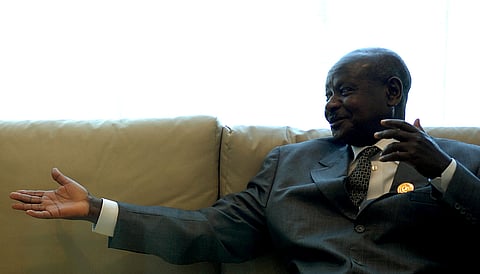


Uganda’s President Yoweri Museveni has been declared the winner of a seventh term, extending his rule to nearly four decades after a contentious election marked by allegations of repression, violent incidents, and an internet blackout that drew international criticism.
The electoral commission announced that Museveni, 81, secured 71.65 percent of the vote, defeating opposition challenger Bobi Wine, who received about 24.7 percent, results that followed a tense campaign and heightened security presence across the country.
The vote took place amid widespread concern from observers and opposition figures over the conduct of the campaign and polling process.
The United Nations and regional observers cited reports of intimidation, arrests, and abductions targeting opposition supporters and civil society groups.
Former Nigerian President Goodluck Jonathan, representing African Union observers, said such actions “instilled fear and eroded public trust in the electoral process,” while also noting that Election Day itself was largely peaceful.
Authorities imposed a nationwide internet shutdown during voting, saying it was necessary to prevent misinformation, a move critics said limited transparency and hindered observation efforts.
Violence was reported after polls closed, including conflicting accounts over fatalities at the home of an opposition lawmaker in central Uganda, with police and opposition figures offering different death tolls and explanations.
Bobi Wine, a singer-turned-politician whose real name is Robert Kyagulanyi, alleged mass fraud and called the results illegitimate.
He said he escaped a security raid on his home and that members of his family were under house arrest, while his whereabouts remained unclear.
“Currently, I am not at home,” Wine said, adding that he was trying to stay safe.
Museveni’s victory was widely expected, given his long-standing control over state institutions and security forces and constitutional changes that removed term and age limits.
Supporters credit him with ending post-independence instability and overseeing economic growth, while critics accuse his government of sustained repression.
With his rule entering a fifth decade, attention is increasingly turning to questions of succession, even as Museveni dismisses suggestions of stepping aside and his party maintains a strong parliamentary position.