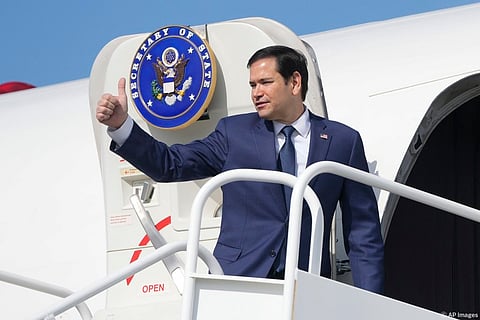


US Secretary of State Marco Rubio is traveling to Uzbekistan and India to strengthen economic and security partnerships, as critics question his absence from high-profile negotiations involving Iran, Ukraine and other major foreign policy challenges.
The trip, Rubio's 31st abroad as secretary of state, comes amid continuing Middle Eastern tensions and strains in US-Ukraine relations.
Rubio is scheduled to arrive in Samarkand on Sunday for meetings with leaders of the C5+1 grouping, comprising the United States, Uzbekistan, Kazakhstan, Kyrgyzstan, Tajikistan and Turkmenistan.
More than 200 business executives will accompany Rubio to Uzbekistan, reflecting Washington's interest in regional investment and access to rare earth minerals.
The visit follows President Donald Trump's meetings with Central Asian leaders, including Kazakhstan's agreement last November to join the Abraham Accords.
Discussions could also address Russian sanctions evasion, given the region's longstanding economic relationships with Moscow.
Questions remain about Washington's enforcement priorities following Trump's recent decisions concerning Russian diesel imports and potential tariffs targeting countries purchasing Russian oil.
Rubio will subsequently visit Mumbai and Jamnagar, where meetings with Indian business leaders, including Reliance Industries Chairman Mukesh Ambani, are planned.
A US official described a potential bilateral trade agreement as nearly complete, raising expectations of an announcement during the visit.
Rubio's itinerary has intensified scrutiny of his diplomatic role as other administration officials lead negotiations involving Iran, Gaza, Russia and Ukraine.
Former US ambassador to NATO Ivo Daalder criticized Rubio's travel priorities, arguing that he has avoided central diplomatic crises and negotiations.
Rubio has not visited Kyiv or Moscow since taking office and was absent from recent US-Ukrainian discussions in Florida.
The State Department rejected suggestions that Rubio is avoiding difficult assignments, emphasizing his involvement in national security deliberations and broader strategic planning.
Deputy Secretary of State Christopher Landau also defended engagement beyond traditional diplomatic centers, challenging criticism of Rubio's regional priorities.
Rubio maintains that strengthening relationships before crises emerge remains an essential diplomatic responsibility.
The trip is scheduled to conclude Thursday.