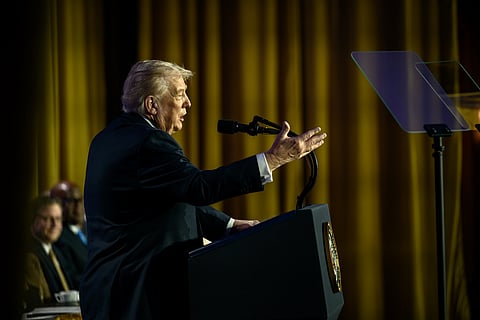


A newly released FBI interview summary has renewed scrutiny of President Donald Trump’s past statements about Jeffrey Epstein, raising questions about what the president knew as the long-running scandal continues to reverberate through U.S. politics.
The document, part of a large batch of Epstein-related files released by the Justice Department, details a reported 2006 phone call between Trump and the Palm Beach police chief during the early stages of a local investigation into Epstein’s alleged abuse of underage girls.
The disclosures come weeks after the release of millions of pages under a bipartisan law, deepening political pressure on the administration and prompting renewed debate over accountability and transparency.
According to the FBI summary of a 2019 interview, then–Palm Beach police chief Michael Reiter said Trump called him in July 2006 after learning of the investigation.
Reiter reported that Trump told him, “Thank goodness you're stopping him, everyone has known he's been doing this.”
The summary also states that Trump said people in New York were aware of Epstein’s behavior, described Ghislaine Maxwell as “evil,” and recalled leaving an encounter with Epstein when teenagers were present.
Reiter later confirmed to the Miami Herald that he received the call, though the Justice Department said it was not aware of corroborating evidence that Trump contacted law enforcement at the time.
The White House reiterated that Trump ended his association with Epstein years before his first arrest and has consistently denied knowing about Epstein’s crimes.
The revelations have coincided with mounting scrutiny of Commerce Secretary Howard Lutnick, who faced intense questioning at a Senate hearing over previously undisclosed contacts with Epstein.
Emails included in the released files suggest Lutnick visited Epstein’s private Caribbean island in 2012, contradicting earlier claims that he had severed ties years earlier.
Lutnick denied wrongdoing and said his interactions with Epstein were limited, while calls for his resignation emerged from both major political parties.
At the same time, congressional Democrats introduced legislation aimed at expanding the ability of adult survivors of sex trafficking to sue their abusers, even decades later.
The renewed attention follows the recent deposition of Maxwell before the House Oversight Committee, where she refused to answer questions, keeping the Epstein case firmly in the national spotlight.