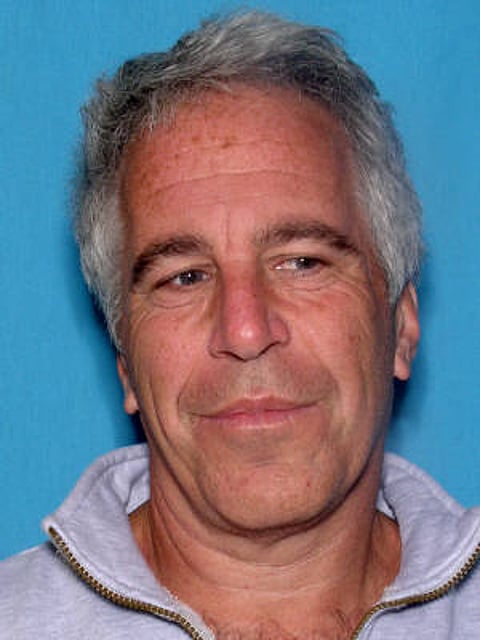


The administration of U.S. President Donald Trump has signaled it is moving to formally close the investigation into deceased sex trafficker Jeffrey Epstein, with no further prosecutions expected in connection with Epstein’s crimes.
On Sunday, Deputy Attorney General Todd Blanche gave a series of interviews to CNN and ABC News in which he stated that the Department of Justice’s review of the Epstein case was complete and that no individuals linked to Epstein would face charges.
“The review that we had done before concluded that there was no such information, and that’s where we remain for what we’ve seen and what we’ve released from the Epstein files,” Blanche said on CNN, adding, “We reviewed [the files]… and there was nothing in there that allowed us to prosecute anybody.”
Blanche reiterated the position on ABC, acknowledging the disturbing nature of the material while insisting it did not meet prosecutorial standards. “There are horrible photographs… troubling emails… [depicting] Epstein or people around him, but that doesn’t allow us necessarily to prosecute somebody,” he said, concluding, “This review is over.”
The statements came two days after the Department of Justice released approximately three million pages of documents, including videos and images, related to the Epstein investigation. The DOJ described the release as the final tranche of materials under the Epstein Transparency Act, legislation President Trump signed into law in November after prolonged resistance.
The handling of the Epstein files has become one of the most politically damaging issues for Trump since returning to office, alienating a portion of his voting base that had expected sweeping disclosures and prosecutions. Trump and several members of his administration had campaigned heavily on the issue, promising accountability for those connected to Epstein’s trafficking network.
That expectation began to unravel last July when the DOJ issued a memo stating the Epstein case was closed, asserting that Epstein had not been involved in crimes with others and that no further disclosures would be made. The announcement triggered a sharp backlash among Trump supporters.
Trump responded by dismissing the controversy as a “Democrat hoax” and publicly suggested that voters dissatisfied with the decision should stop supporting him. Following that, most Republican lawmakers fell in line, voting against multiple congressional resolutions demanding the release of the Epstein files.
The political calculus shifted in November when Democrats, joined by four Republicans, successfully advanced a discharge petition that would have forced a floor vote on the issue, bypassing Republican leadership. Facing a looming political embarrassment, Trump reversed course and instructed Republicans to support the bill, despite having privately pressured the dissenting lawmakers to withdraw their support.
The fallout extended beyond the legislation itself. Former Congresswoman Marjorie Taylor Greene has stated that she became a target of Trump’s political retaliation over her stance on Epstein. After Trump announced support for a primary challenger against her, Greene resigned from Congress and has since claimed Trump himself called her and told him his friends would be "hurt" if the files were released.
Trump has since backed a primary challenge against Representative Thomas Massie, another advocate for releasing the Epstein files, while Representative Nancy Mace opted not to seek reelection—widely viewed as an effort to avoid becoming the next focus of Trump’s political reprisals.