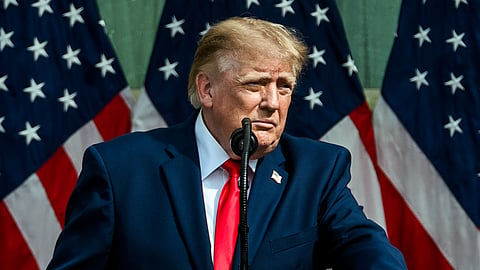


President Donald Trump criticised the US Supreme Court after it rejected his administration’s effort to impose new restrictions on mail-in voting ahead of November’s midterm elections, leaving existing state procedures in place as postal voting has already begun in some states.
The justices late Monday upheld a federal judge’s order temporarily blocking the US Postal Service from implementing new requirements after election officials warned that late changes could cause delays, confusion and voter disenfranchisement.
Trump’s March executive order directed the USPS to deliver ballots only to voters appearing on citizenship lists and called for unique barcodes on postal ballot envelopes.
State and local officials would also have been required to provide information through an online portal about voters receiving mail ballots.
Twenty-three states and Washington, DC, sued to stop the order, while election officials from Democratic-led states warned the changes were not ready for implementation.
Several Republican-led states supported Trump, but seven Republican state election officials separately warned that late changes could lead to mistakes, delays and confusion.
Justice Brett Kavanaugh agreed with blocking the rules for the 2026 elections while indicating the Postal Service could ultimately prevail as litigation continues.
He said applying the rule this year would be arbitrary and capricious.
Justices Samuel Alito and Clarence Thomas dissented.
Trump responded Tuesday by sharply criticising the court and justices who ruled against him, including judges he nominated.
“Republicans just got another bad decision from the United States Supreme Court,” he wrote on Truth Social.
He also linked the dispute to other Supreme Court rulings against his administration involving birthright citizenship and tariffs.
The decision follows lower-court rulings blocking the postal changes, including an injunction issued by Judge Indira Talwani on September 4 and another ruling against the order by Judge Carl Nichols on Sunday.
Election officials said some ballots have already been distributed and election materials printed, making major procedural changes costly and disruptive.
The ruling allows states to continue using their existing mail-ballot processes while the broader legal challenge proceeds.