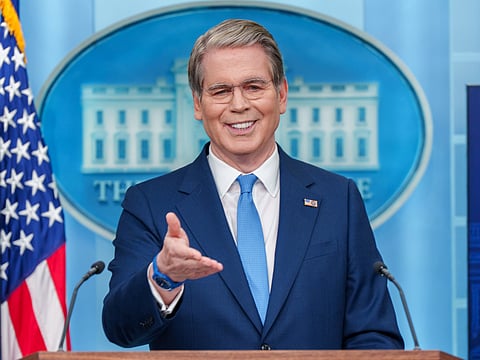


US Treasury Secretary Scott Bessent has moved from his Washington, DC, residence to a US military base after threats attributed to Iran, according to Reuters, citing two people familiar with the matter.
The New York Times first reported the move.
Director of National Intelligence Jay Clayton wrote in an unclassified October 23 memo that Iran had “substantially increased” efforts to target US personnel and that lethal plotting against US citizens had reached “advanced stages” in the Middle East and certain other countries, according to CBS News, which obtained the memo, and the memo itself.
The memo did not identify specific targets or say attacks were imminent.
The severity of the threats against Bessent remains unclear, CBS News reported. Iran has previously denied plotting attacks against officials or other people on US soil, according to Al Jazeera.
The Wall Street Journal had published an aerial image of Bessent’s Georgetown home, a source familiar with the matter told Reuters. The source said the image enabled the property to be geolocated and prompted Bessent’s relocation for his safety. The account rests on that one source. Reuters reported that Bessent bought the mansion for $12.5 million shortly after his confirmation as Treasury secretary in January 2025.
Bessent has been a central figure in Washington’s economic pressure campaign against Tehran, which the Treasury calls Operation Economic Outcast.
Treasury records show the operation formally began on August 24, 2026, with expanded sanctions authorities aimed at five sectors of Iran’s economy: digital assets, technology, gold, aviation and shipping.
Later Treasury actions included a September 8 designation of 27 Iranian airlines and action against front companies and routes used to buy US-origin aircraft, and an alert from the Treasury’s Financial Crimes Enforcement Network asking financial institutions to report aviation procurement networks.
Reuters said the Treasury intends the campaign to pressure Tehran to halt attacks on shipping and reopen the Strait of Hormuz, which has been largely closed since US and Israeli attacks on Iran on February 28.
On August 23, the day before the operation formally began, Iranian Foreign Minister Abbas Araqchi said in a Telegram video that the new US sanctions plans would fail: “this new issue of theirs will fail as well,” according to Al-Monitor. The remarks predate the Bessent reports and do not address them.
A Treasury spokesperson told Reuters that Bessent would not be deterred by the threats and would continue implementing the operation and supporting the US blockade of Iranian ports.