

In a high-stakes geopolitical standoff characterized more by symbolic gunboat diplomacy than sincere negotiation, the United States has issued a stark dual ultimatum to Iran while simultaneously deploying a formidable naval armada to the Persian Gulf. President Donald Trump publicly declared that Tehran must abandon its peaceful nuclear energy program and cease its internal security response to foreign-backed unrest, presenting these non-negotiable demands as the only alternative to devastating military action. This coercive approach, however, has been met not with submission but with a firm and principled rebuttal from the Islamic Republic, which has drawn a clear line in the sand: Iran will defend its sovereignty and negotiate only on an equal footing, never under the shadow of threats.
No Negotiations Under Duress
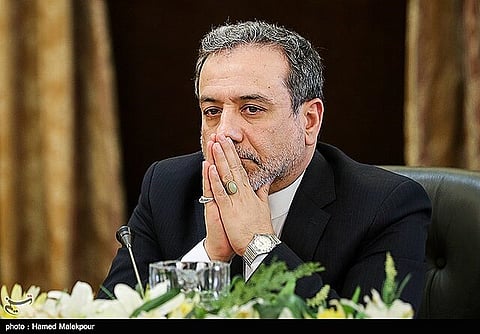
Responding to the American posture, Iranian Foreign Minister Abbas Araghchi articulated a consistent and sovereign position during diplomatic engagements in Turkey. He stated unequivocally that "Iran has no problem with negotiations, but negotiations cannot take place under the shadow of threats". This foundational principle rejects the very premise of the Trump administration's strategy, which attempts to use the USS Abraham Lincoln carrier strike group and its accompanying destroyers and fighter jets as leverage at the bargaining table. Araghchi extended Iran’s readiness for a "fair and equitable" diplomatic process, one based on "mutual interest, mutual respect and mutual trust," while making it abundantly clear that the nation's defensive and missile capabilities, essential for its security in a volatile region are entirely non-negotiable. This stance frames the U.S. demands not as a path to peace, but as an attempt to unilaterally disarm Iran, leaving it vulnerable. As senior Iranian adviser Mehdi Mohammadi noted, Washington’s terms “translate into disarming yourself so we could strike you when we want”.
A Regional Chorus for De-escalation
Significantly, the American strategy of military intimidation has found little support among Washington's own traditional allies in the Middle East, who fear the catastrophic regional consequences of another war. Nations including Turkey, Saudi Arabia, Qatar, the United Arab Emirates, and Egypt have embarked on a concerted diplomatic push to lower tensions, actively lobbying the Trump administration against military action. Turkish President Recep Tayyip Erdogan has offered to act as a mediator, while Foreign Minister Hakan Fidan has explicitly warned that an attack on Iran is "wrong" and urged the U.S. to "act with common sense". Perhaps most tellingly, Gulf powers like Saudi Arabia and the UAE have privately and publicly declared they will not allow their airspace or territory to be used to launch attacks on Iran, fundamentally undermining the logistics of any potential U.S. strike plan. This regional consensus underscores a critical reality: America’s partners view a destabilized Iran as a far greater threat to their own security and economic stability than its current government.
The Flawed Logic of "Maximum Pressure" and Its Proliferation Peril
Analysts and scholars warn that the current U.S. approach, which appears aimed at forcing regime collapse or total capitulation, is catastrophically misguided. The Islamic Republic, with its population of over 90 million and deeply embedded security institutions like the Islamic Revolutionary Guard Corps (IRGC), is not a fragile state poised to fall. More dangerously, the threats of military action actively encourage the very nuclear proliferation the U.S. claims to oppose. The historical lessons are there: Libya abandoned its nuclear program and saw its leader overthrown with Western help; Ukraine gave up its nuclear arsenal in exchange for security guarantees that proved worthless against Russian invasion. Iran itself exercised restraint for years as a nuclear "threshold state," only to be struck by U.S. and Israeli bombs in June 2025. The unmistakable lesson for Iran and for watching nations like Saudi Arabia and Turkey, is that only the actual possession of nuclear weapons, not promises or restraint, guarantees security against foreign intervention. As Farah N. Jan, a scholar of proliferation, warns, a U.S. strike "could trigger the most significant wave of proliferation since the technology’s advent".
Internal Affairs and External Exploitation
The Trump administration has cynically attempted to tie its geopolitical demands to Iran's internal affairs, specifically the protests that began in late December over economic grievances. While expressing concern, the U.S. president's primary focus has swiftly shifted to nuclear demands, overshadowing the human toll. This instrumentalization of domestic unrest is viewed in Tehran as blatant interference and a pretext for broader strategic goals. The European Union’s decision to designate the IRGC as a terrorist organization has been condemned by Iran as a "major strategic mistake" by a "declining continent," further complicating diplomatic channels.