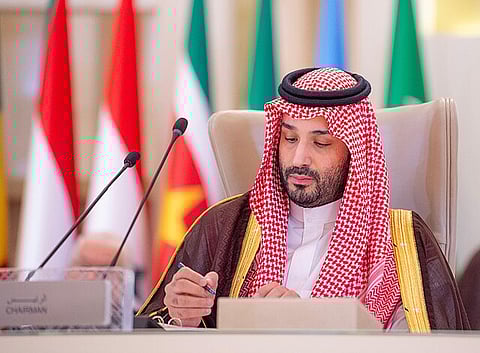


Saudi Arabia has publicly declared they will not allow their territories to be used for any U.S. military action against Iran. The announcement came after a pivotal phone call between Saudi Crown Prince Mohammed bin Salman and Iranian President Masoud Pezeshkian, in which the Crown Prince affirmed his country's respect for Iran's sovereignty and refusal to permit attacks from Saudi airspace or soil. This stance was swiftly echoed by the UAE, which also ruled out providing logistical support for hostile actions. The declarations mark a notable setback for the Trump administration's coercive strategy and underscore a growing regional consensus that prioritizes dialogue and stability over confrontation.
The diplomatic breakthrough arrives amid the most pronounced U.S. military buildup in the region in years. President Donald Trump has repeatedly threatened military intervention, citing Iran's handling of internal protests, and recently warned that "the next attack will be far worse," urging Tehran to negotiate on its nuclear program. To reinforce these threats, a formidable naval force led by the USS Abraham Lincoln aircraft carrier strike group has been deployed to waters near Iran. This "armada," as Trump described it, includes advanced F-35 stealth jets and destroyers armed with Tomahawk cruise missiles, representing a highly flexible and potent strike capability. Concurrently, the U.S. Air Force has announced a major regional exercise, Operation Agile Spartan, to demonstrate its ability to rapidly deploy combat airpower.
Iran has met this escalation with a posture of unwavering defiance and readiness. Foreign Minister Abbas Araghchi has stated that the nation's armed forces are prepared, with "their fingers on the trigger," to respond immediately and powerfully to any aggression. Senior officials have warned that any attack, whether limited or extensive, would be treated as "an all-out war against us," with all U.S. bases and interests in the region considered legitimate targets for retaliation. This resolve is informed by what Iran calls "valuable lessons" from the 12-day war with Israel and the U.S. in June 2025, which included strikes on Iranian nuclear facilities. The Iranian position is clear: it will not engage in negotiations under the shadow of military threats.
The refusal of Saudi Arabia and the UAE to facilitate an attack reflects deep-seated regional fears and a strategic recalibration. Both nations, despite being long-time U.S. security partners, reportedly fear being dragged into a devastating wider war that would inevitably engulf the Gulf. Their neutrality statements are a direct effort to insulate themselves from the catastrophic consequences of a conflict. This sentiment is shared by other regional powers. Egypt, Turkey, and Qatar have all engaged in urgent diplomatic outreach, calling for de-escalation and stressing that any war would spread far beyond Iran's borders. Turkey's Foreign Minister went so far as to call a potential attack "wrong," urging Washington to return to diplomacy.
The current crisis is deeply intertwined with Iran's internal unrest, which began in late December 2025 as protests over a severe economic crisis and currency collapse. While the large-scale street demonstrations have subsided after a severe crackdown and a nationwide internet blackout, the underlying grievances remain potent. The U.S. administration has attempted to leverage this domestic vulnerability, with Trump explicitly linking the threat of military action to Iran's treatment of protesters.