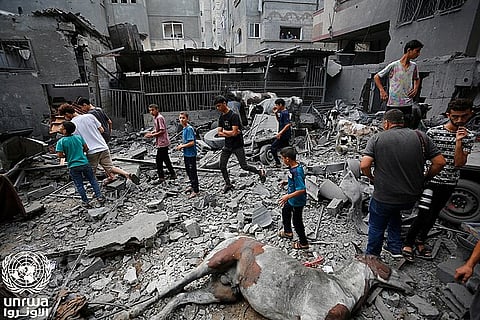


In a devastating escalation that has exposed the fragile nature of the U.S.-brokered truce, Israeli warplanes launched a series of intense airstrikes across the Gaza Strip on Saturday, killing at least 30 Palestinians and marking one of the deadliest single days since the ceasefire began in October. The attacks, which targeted a police station, residential apartments, and a tent camp for displaced families, have drawn widespread condemnation and cast severe doubt on the viability of the internationally backed peace plan. With the total number of Palestinians killed since the start of the ceasefire now surpassing 500, these strikes underscore a brutal reality: for the people of Gaza, the bombs have never truly stopped falling.
A Day of Carnage
The assaults began in the early hours, striking with lethal precision at the heart of civilian life. In Gaza City, an airstrike leveled a residential apartment building, killing three young sisters, their aunt, and their grandmother as they slept. Relatives found the girls' bodies in the street. "They say 'ceasefire' and all. What did those children do?" asked a grieving uncle, Samer al-Atbash. Another strike hit the Sheikh Radwan police station in the city, killing at least 11 people, including four policewomen and detainees. Further south, in Khan Younis, helicopter gunships fired on a tent camp sheltering families who had already been displaced by the war, igniting a fire that killed seven people from one family, including a father and his three children. Rescue teams spent hours searching for survivors beneath the rubble of various sites, with hospital officials warning the death toll was likely to rise due to the severity of injuries.
Hollow Promises
The Israeli military justified the onslaught as a response to a Friday incident where it said troops identified eight militants emerging from a tunnel in Rafah, killing three and capturing one. However, this explanation rings hollow to Palestinians and observers who note that Israeli attacks have been a near-daily occurrence since the truce took effect. An analysis by Al Jazeera found that Israel had attacked Gaza on 82 out of the first 97 days of the ceasefire, with only 15 entirely peaceful days. The Gaza Government Media Office has documented over 1,193 violations by Israel through air raids, artillery fire, and shootings in that period. Hamas officials condemned Saturday's assault as "a renewed flagrant violation" and a continuation of a "brutal war of genocide," accusing the U.S.-backed "Board of Peace" of functioning instead as a "Board of War".
A Blockade That Never Ended
The latest violence is a continuation of a war that has ravaged Gaza since October 2023. The conflict began when Hamas-led militants launched a cross-border attack into Israel, killing approximately 1,200 people and taking hundreds hostage. Israel's retaliatory military campaign has been catastrophic, killing over 71,000 Palestinians according to Gaza's Health Ministry, a figure recently acknowledged as largely accurate in an Israeli military briefing to journalists. The war has displaced nearly the entire population and left most medical infrastructure in ruins. Despite the ceasefire agreement stipulating an immediate halt to attacks and the full entry of humanitarian aid, neither promise has been kept. Israel continues to restrict vital supplies, blocking nutritious food and barring dozens of international aid organizations from operating, while the crucial Rafah border crossing with Egypt remains sealed.
Disconnected from Reality
These attacks come at a symbolic moment, on the eve of the scheduled reopening of the Rafah crossing under the second phase of President Donald Trump's "Comprehensive Plan to End the Gaza Conflict". The plan, which involves disarming Hamas and installing a technocratic administration, has been met with deep skepticism on the ground. The first phase of the deal has largely failed: Israel did not fully withdraw its troops, humanitarian aid is still strangled, and violence persists. For displaced families huddling in tents, the grand diplomatic designs for "reconstruction and prosperity" seem a cruel fantasy. "We don't know if we're at war or at peace, or what. Where is the truce?" asked Atallah Abu Hadaiyed, surveying the smoldering ruins of his family's shelter in Khan Younis.
An Uncertain Future
The strikes triggered immediate international reproach. Egypt, a key mediator, condemned them in the "strongest terms," warning they represent a direct threat to the entire political process. Qatar, another central mediator, denounced the "dangerous escalation" and repeated Israeli violations. The bloodshed exposes the fundamental paradox at the heart of the current moment: as the United States declares progress on a peace roadmap, the Israeli military continues to wage war with impunity. With hundreds already dead under the truce and key elements of the agreement unfulfilled, Saturday's carnage signals that without urgent and decisive international pressure to halt all attacks and end the siege, the suffering of Gaza's civilians will only deepen.