

Qatar has positioned itself as a critical mediator between the United States and Iran, urgently warning that military escalation would have devastating regional consequences. This diplomatic push comes as Washington weighs air strikes and economic sanctions against Tehran in response to a government crackdown on nationwide protests, a move that could quickly spiral into a wider conflict given recent history.
Qatari officials have issued stark warnings against military action. "We know that any escalation… would have catastrophic results in the region and beyond, and therefore we want to avoid that as much as possible," stated Majed al-Ansari, a spokesman for Qatar's foreign ministry. The Gulf nation is actively working to mediate rising tensions, emphasizing that diplomacy is the most effective way to resolve the crisis. Qatar's unique position allows it to communicate with both sides, and it is involved in "talking to all parties... to find a diplomatic solution". This role is complicated by Qatar's hosting of the massive Al Udeid Air Base, a key U.S. military hub.
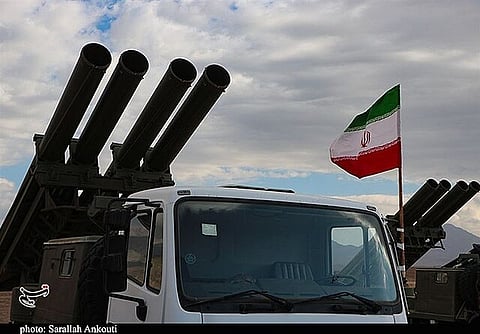
The risk of immediate escalation is shown by a very recent precedent. In June 2025, following U.S. strikes on Iranian nuclear facilities, Iran retaliated by launching ballistic missiles at the Al Udeid Air Base in Qatar. While Qatar claimed its defenses intercepted most of the missiles, the attack demonstrated Iran's willingness and capability to strike back against American assets in the region. Iran's Islamic Revolutionary Guard Corps warned afterward that any further U.S. aggression could lead to the "collapse" of America's military presence in the Middle East. This history makes the current U.S. threats of military action particularly destabilizing. At the same time, the U.S. military and its partners have recently opened a new air defense operations cell at the Qatar base, explicitly aimed at enhancing regional missile defense as tensions rise.
Despite President Donald Trump's bellicose rhetoric, including telling Iranians "HELP IS ON ITS WAY" and urging them to "take over your institutions," his administration faces severe practical limitations for effective military action. Defense analysts note that the U.S. currently has no aircraft carriers deployed in the Middle East, and any strikes would likely require complex, long-range missions or permission to use regional bases, which would then become targets for Iranian retaliation. Military experts question what could be effectively bombed to stop the internal crackdown and warn that strikes could backfire by hardening the regime's resolve and triggering a "rally around the flag" effect. The U.S. has already escalated economically, announcing a 25% tariff on any country trading with Iran, a move which has been condemned by partners and could further isolate Iran economically.
In response to U.S. threats, Iranian officials have been unequivocal. Parliament Speaker Mohammad Bagher Ghalibaf stated that the U.S. military and shipping would become "legitimate targets" if Iran is attacked. Foreign Minister Abbas Araghchi has said Iran is not seeking war but is "prepared for all options". This defiance comes as the government faces one of its most significant challenges in decades.
The path forward is perilous. Qatar's mediation offers a fragile hope for de-escalation, but it operates under the long shadow of past strikes and the volatile nature of U.S. decision-making. As the internal crisis in Iran deepens, the world watches to see if diplomacy can prevail over the threat of a regional war.